Key details
Date
- 13 May 2026
Author
- Alexandra Genova
Read time
- 10 minutes
Professor Teal Triggs reflects on trust, peer exchange and experimental publishing as vital supports for doctoral researchers.

As part of our ongoing series exploring research supervision at the Royal College of Art, we speak with leading supervisors about the relationships, methods and ideas that shape doctoral research at the College. The series, Inside Supervision at the RCA: Conversations on research, risk and collaboration, offers insight into the often unseen work of supervision and the role it plays in guiding PhD students through complex, practice-led research journeys.
For the second conversation in the series, we speak with Teal Triggs, Professor of Graphic Design in the School of Communication. A leading voice in design research, experimental publishing and doctoral education, Triggs reflects on supervision as a learning collaboration: one built on trust, mutual respect, clear communication and a shared commitment to the advancement of knowledge.
In this conversation, she discusses how supervisors can create supportive environments for risk, experimentation and uncertainty; the importance of peer exchange in countering the isolation of PhD research; and how initiatives such as Methods of Intent, itinerant space and itinerant space Papers are opening up new ways for doctoral researchers to share work in progress, test ideas and develop confidence as researchers.
Accompanying the Q+A is a filmed conversation between Teal Triggs and PhD student Kam Rehal. Together, they discuss the experience of undertaking a Communication PhD at the RCA, the value of peer support and dialogue, and where doctoral research in communication can lead next.
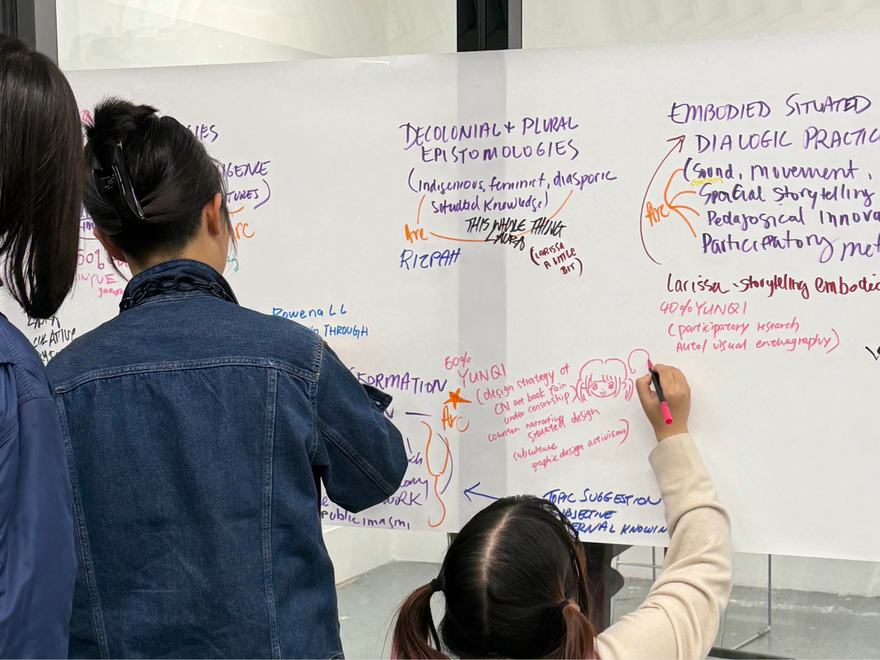
PhD Communication students experiment with ideas
In your view, what does a successful researcher–supervisor partnership look like? What qualities make that relationship work well over the course of a PhD?
At the core of any successful researcher-supervisor relationship is trust and mutual respect. Researcher-supervisor partnerships, in my view, are learning collaborations. And, as such partnerships are negotiated spaces that accommodate diverse working practices, learning experiences and career aspirations. It also helps to share a deep commitment to the advancement of the subject!
The researcher–supervisor relationship should in the main be democratic. Everyone on the team has an equal part to play. What underpins a successful professional partnership is clarity of communication. The doctoral journey takes place over a relatively long period of time! Creating a trusted environment is meant to foster productive dialogue; listening is part of this. Supervision is also about acknowledging when you don’t know.
Establishing agreed ways of working from the very beginning and articulating the primary roles and responsibilities of each participant in the supervisory team and the researcher is essential. Success lies in more than guidance, it also resides in researchers taking ownership, gaining agency in the process and progressing subject expertise.
The process should be an ongoing conversation where expectations are shared and co-managed. For me, doctoral learning sometimes needs ‘scaffolding’ to support the research process. For example, considering in the research how to manage work-life demands and even those inevitable unexpected turns in the research process. What this looks like may differ between supervisory teams, but at its core includes setting out an agreed programme of timed, regular meetings, feedback processes and establishing effective working patterns.
Saying this, the scaffolding shouldn’t become mechanistic or instrumentalised. Research is a chaotic, messy process. Challenges may come out of the blue, and as supervisors we need to be agile and responsive to these.
“At the core of any successful researcher-supervisor relationship is trust and mutual respect.”
Educator, historian and writer
Risk and experimentation are often central to practice-based doctoral research. How do you create an environment where students feel able to test ideas that are still unfinished or uncertain?
For me, there are three kinds of environments to consider. One is the physical environment – in this case, the PGR Studio located at the Kensington campus, which is shared between doctoral researchers working in Communication and Design. Our PGR Studios offer dedicated workspaces and a place for informal knowledge exchange and networking opportunities across the two broader areas of study. These studios are important for bringing researchers together in proximity and provides a home-base for their studies. Researchers are encouraged to make the space their own and to create a comfortable (and productive!) working environment. We even have a kitchen where researchers can relax and have lunch together!
The second type of environment is less tangible and instead, has to do with fostering human connections and fostering mutual respect – whether between researchers, supervisors, technicians, librarians or student support staff. We are keen to create a safe and supportive working environment that is inclusive, celebrates difference and fosters open dialogue. To do this, for example, as part of our Methods of Intent seminar programme, we take walks together to learn about the histories of a place, share traditional or popular food dishes from around the world for lunch and work through understanding critical texts, by reading together.
“Failure is an inherent part of any research investigation and if embraced, may bring unanticipated insights into focus.”
Educator, historian and writer
And the third, is the academic environment where supervisions, seminars and the Doctoral Training Programme give rise to critical discussions on the role of ethics, experimentation, and ‘risk-taking as method’. Many of our doctoral researchers are working as creative practitioners (writing is also a form of practice) and the idea of testing and evaluating is part and parcel of what we do. However, framing experimentation within formalised academic processes sometimes creates tensions between ways of doing and knowing, that may push a researcher outside of their comfort zone. If managed well, this is a very productive part of any research process as it informs decisions about the direction of the research. Failure is an inherent part of any research investigation and if embraced, may bring unanticipated insights into focus. The key is to acknowledge that risk-taking should be seen as a positive experience and integral to the learning process. Establishing empathetic environments is one way to build confidence whilst engaging in friendly but critical conversations, in the pursuit of new knowledge. There was a lapel badge that was popular a few years ago that said ‘Make More Mistakes’: I agree, but within a framework!
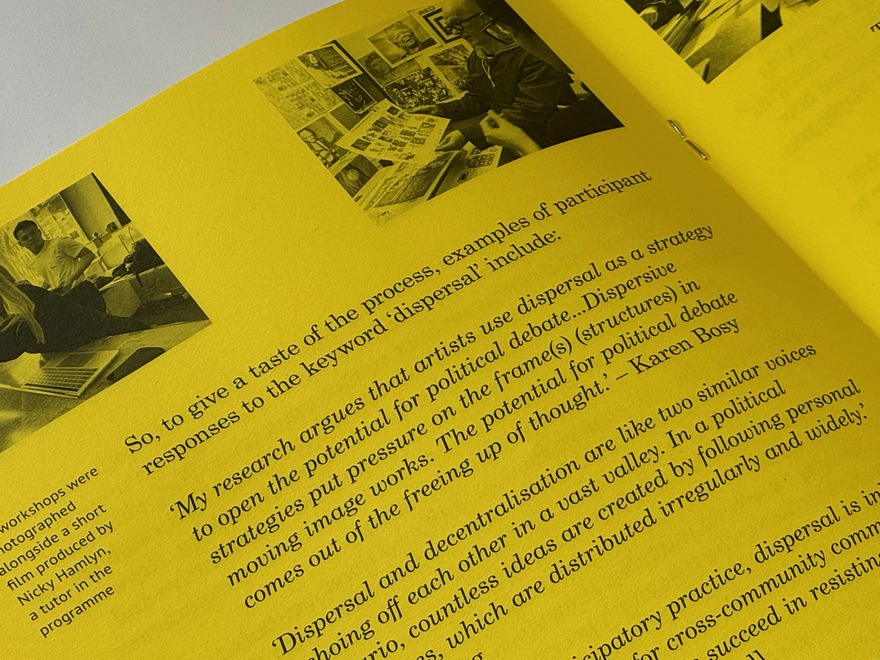
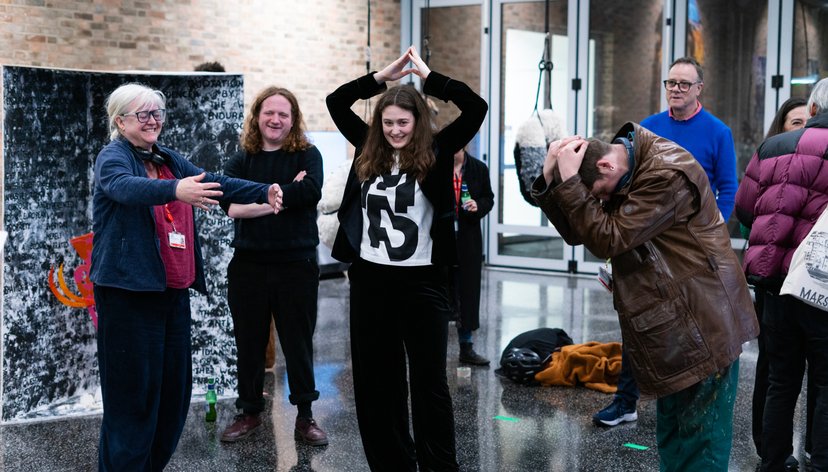
Workshops held as part of the PhD process at the RCA
Doctoral research is often described as a journey, but it can also involve moments of uncertainty or feeling lost. How do you support students through those phases without directing the project too strongly?
Research is inherently full of uncertainty where ‘feeling lost’ is integral to the process of learning and is differently expressed within the PhD journey. For example, the first year is exploratory and may need additional supervisions for confirming directions for the research. I’ve heard students refer to this phase as ‘the overwhelm’ – so true!
In the second-year, researchers will have an idea of their research trajectory but may not be sure how to reconcile what they have learned with their practice, and in the final year doubt may take hold as the researcher needs to make certain their findings, insights and practice. The journey is about transformation and gaining self-confidence toward becoming an independent researcher. With this comes an acceptance that no PhD is ever perfect.
Supervisors play an important supportive role in providing reassurance and guidance. Ensuring a balance between supporting and directing is not easy and requires supervisors to be aware of how their students are feeling about the journey and where there may be a lack of confidence and why. Knowing when to point the student towards the Student Success team (we have a brilliant team at the RCA!) is also part of this guidance.
Supervisors may also need guidance. For example, there will be a moment in the process where the supervisor will need to ‘let go’ as part of the process of the researcher becoming independent and ‘owning’ their research. Knowing when this moment has arrived comes with experience, but it is something that can be learned. All supervisors at the RCA are themselves mentored in various ways, e.g. via RCA’s supervisor training forums, where they can share experiences.
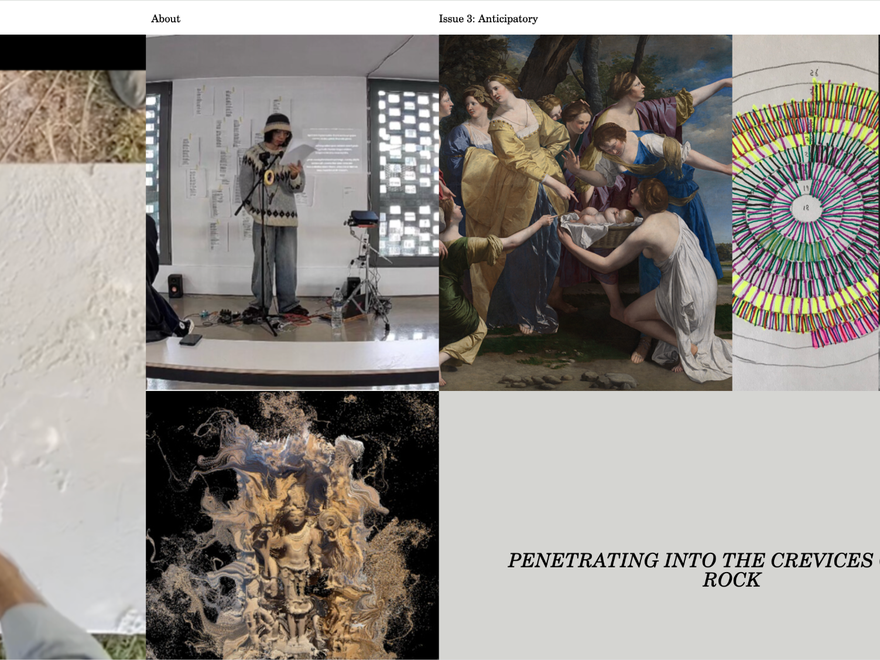
The homepage of itinerant space, issue 3
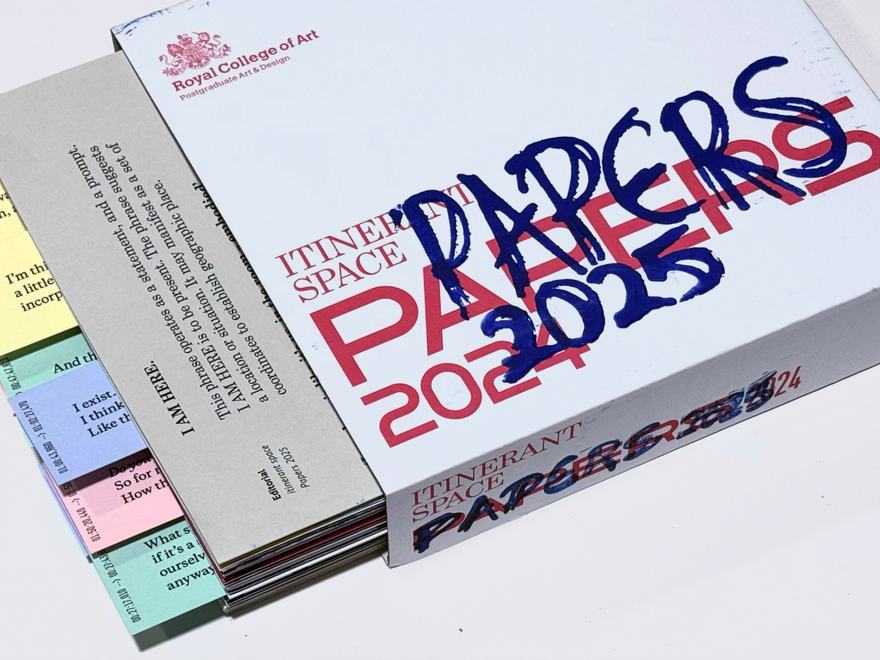
itinerant space papers 2024/2025. Photo by Yunqi Peng
You’ve been interested in creating spaces where research can be shared while it is still in progress. What role do peer discussion and collective critique play in doctoral research at the RCA? Through initiatives such as “itinerant space”, you’ve explored alternative ways of publishing research-in-progress. What opportunities do experimental publishing models create for doctoral researchers?
PhD research can be very isolating. I know from my own PhD experience (and subsequent book projects).
With regard to collective critique, when I began at the RCA in 2012, the School of Communication hosted film seminars for the MPhil/PhD cohort focussing on critical theory readings and film analysis. However, as our staff subject expertise expanded, so too did the diversity of the PhD subjects. This was coupled with an identifiable need to address the often-felt isolation of the PhD journey: we wanted to rethink how we supported new areas of interdisciplinary and communication research and the expectations that came with this. We began by offering a co-created weekly programme called ‘Methods of Intent’ which built on students’ prior knowledge, but with the aim to disrupt and expand on ways of knowing. Our hope was to create a non-hierarchical learning space. We wanted to foster collaborative working practices that would provide a space of mutual respect and productive knowledge exchange. We weren’t complacent, and continued working with the cohort to improve and adjust to new kinds of research projects.
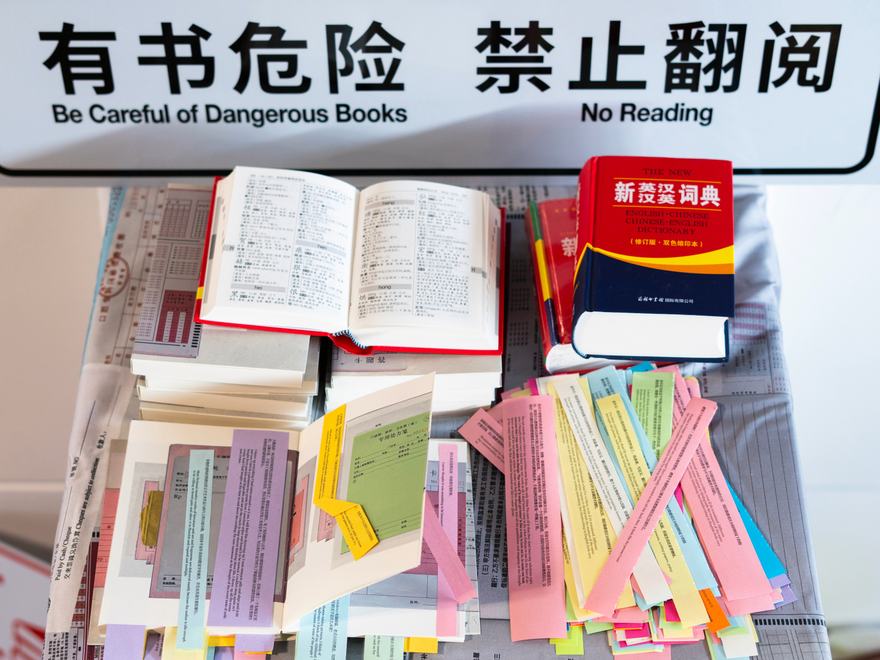
Work at the Research Biennale by Yunqi Peng, Communication MPhil/PhD
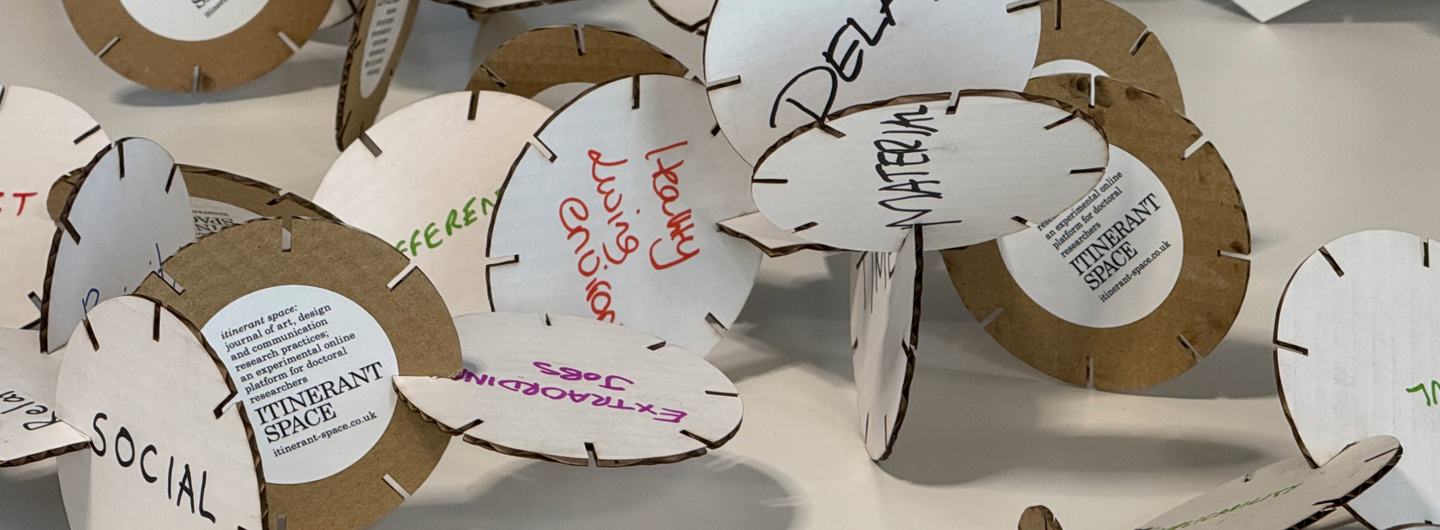
Building on this approach with our PhD researchers, we co-founded itinerant space – a journal of art, design and communication research practices - an online experimental platform for doctoral researchers at the RCA. The journal takes as its starting point an understanding of conventional academic publishing practices and subverts them by exploring new ways of publishing research-in-progress. The platform encourages doctoral researchers to explore dissemination and the variable ways of communicating their ideas and practices. This takes place through four formats – text, image, time-based and a Sandbox - a versatile digital canvas. itinerant space is also a vehicle for early career researchers to put into professional practice a set of skills and learning focussing on academic publishing; for example, what it means to be an editor, peer reviewer or contributor.
The journal offers RCA’s doctoral researchers an opportunity to hone their publishing skills, to engage with ethics and critically question what it means to disseminate their research and gain feedback from peers. Our PhDs have been involved since the project’s inception in 2020 (during the pandemic lockdown), fully contributing to the debates on the journal’s academic intentions, it's a more playful, experimental format and design (with alumnus Tom Finn from Regular Practice and Mads Kullberg, site developer) to developing peer review processes that aim to foster dialogue between journal editors and contributors in an equitable, peer-to-peer process. Conversation as method plays into this in the same way ‘Methods of Intent’ has provided a critical platform. Six years later, as we are preparing issue 4 (launching in July 2026), itinerant space continues to evolve as a researcher-led initiative, promoting inclusive and ethical practices and giving opportunity for researchers to gain academic confidence and to participate in collaborative publishing practices.
“Research is inherently full of uncertainty where ‘feeling lost’ is integral to the process of learning and is differently expressed within the PhD journey.”
Educator, historian and writer
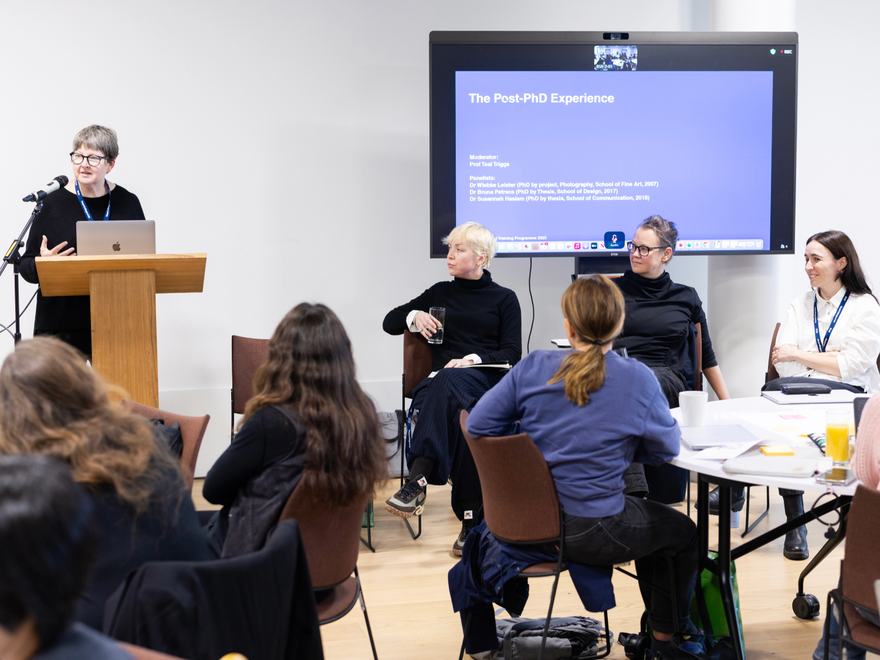
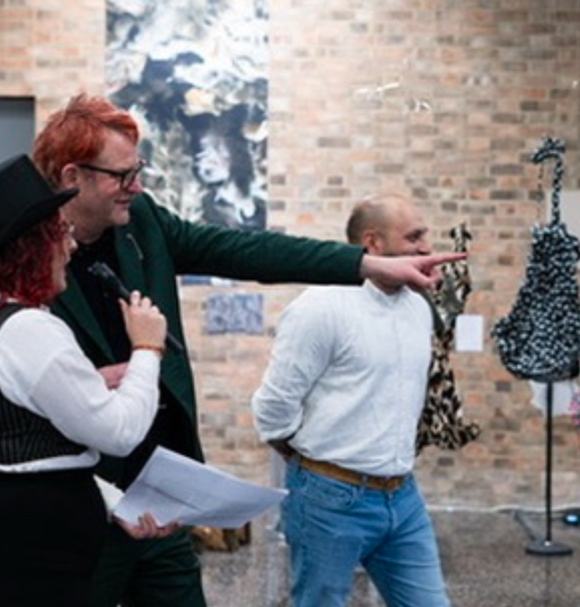
Teal Triggs hosts a talk about the post-PHD experience
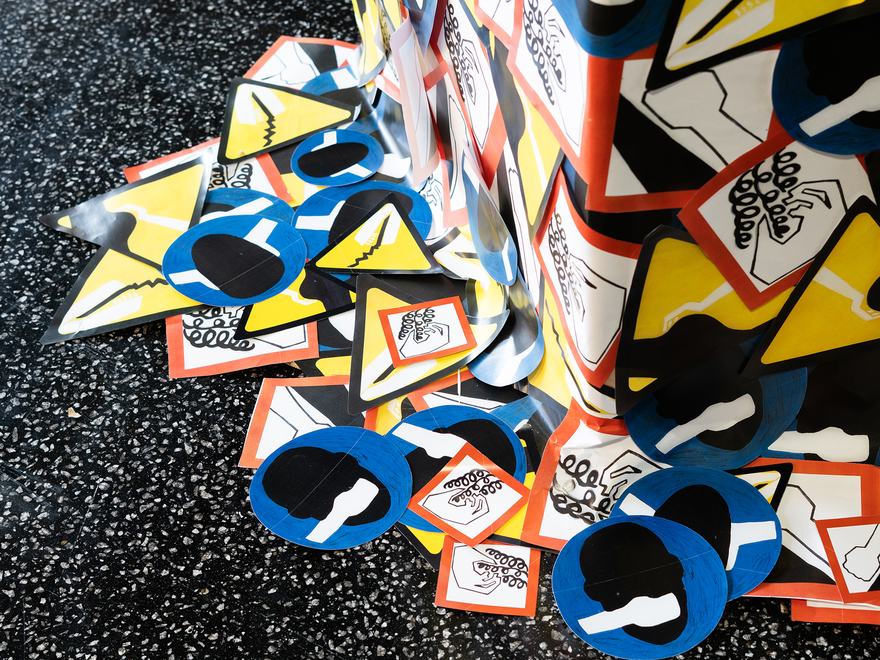
Work at the Research Biennale by Rizpah Brinkman, Communication MPhil/PhD
As students approach the end of the PhD, the focus often shifts towards dissemination and impact. How do you encourage doctoral researchers to think about who their work is for, and how it might reach audiences beyond the thesis?
As I’ve mentioned above, itinerant space is one way in which our researchers might consider what it means to disseminate their research on a digital platform at any point within their PhD journey. We don’t necessarily hold-off until the end of the PhD for dissemination to take place, rather we encourage an iterative approach. In the School, researchers have several opportunities to encourage peer-to-peer dissemination in a range of forums – e.g. School-based round table discussions with staff researchers, formal presentations to PGRs in other institutions, the RCA Doctoral Training Programme (DTP), or contributing to events held by RCA staff research groups. These spaces also help in preparing researchers to contribute to professional subject-based conferences or other kinds of external facing dissemination platforms. An iterative process is also supported and informed by supervisory meetings, where students are often asked to articulate their research progress, approaches, findings and decision-making processes.
We actively encourage PhD researchers to take advantage of any relevant opportunities they might gain from speaking about their work and receiving feedback. We also encourage practice-led researchers to be involved in presenting and documenting their work in exhibitions, performances, screenings, installations, and so forth.
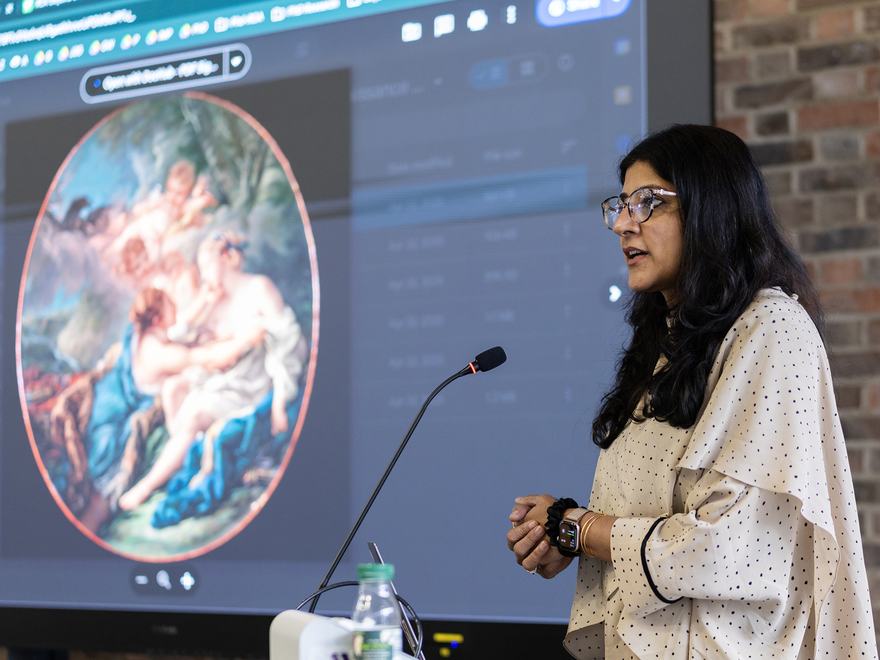
Communication MPhil/PhD student Archana Prasad presenting at the RCA AI Festival 2026
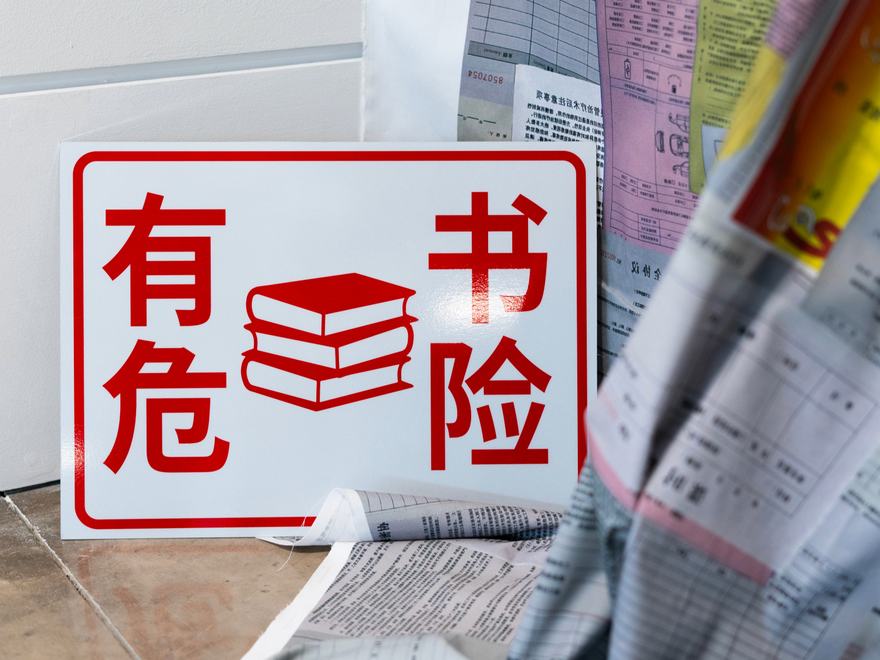
Work at the Research Biennale by Yunqi Peng, Communication MPhil/PhD
For communication research this is part and parcel of the wider disciplinary practice of knowing how to identify and make connections with intended audiences and the most effective means to do so. This includes an awareness of audience accessibility and ability to provide a clear argument in the presentation of the work. It also includes thinking about how the research might be rolled out and built upon by future scholars.
One way we support this exploration is through a recurring publication series titled itinerant space Papers (2024, 2025). Using collaborative making practices and keyword descriptors, the focus tends to be on themed topics around the wider question: what does communication research look like? The intent is to explore, interrogate, write about and critically reflect on communication research and how researchers are positioning their work within a range of (inter-)disciplinary practices. Doctoral researchers lead this conversation co-hosting workshops to co-develop editorial and design directions. The resulting publication forms a snapshot of doctoral communication research from that year and will give rise to reflections and further insights into how our researchers are contributing to wider disciplinary knowledge formation. itinerant space Papers is due out in summer 2026.