Key details
Date
- 16 February 2026
Read time
- 5 minutes
Dalal Al Mutairi (Photography MA, 2025) is a Multidisciplinary Artist from Saudi Arabia, whose work is rooted in themes of memory, emotion and identity. Here, she reflects on her creative process and the freedom she finds in working on intimately personal stories.
Your work often returns to ideas of memory, home and emotional landscapes. When did you first realise these themes were central to your practice?
During my time at the RCA, I began to notice that I was consistently drawn back to the same themes. As my project evolved through one-to-one critiques, feedback, and intimate conversations with others and myself, it became clear that these themes have always been at the core of my work and an essential part of my healing process.
Many of your projects draw from personal and family history. What does working with such intimate material give you as an artist and what does it demand of you?
Working with such intimate materials and subjects requires me to soften—to let go of judgment and to listen without interruption. In return, the process gives me clarity, freedom, and inner peace. By remaining honest and emotionally present in my work, I found myself embraced by a supportive community. When I opened up, others felt safe to open up to me, and meaningful conversations unfolded. I am deeply grateful for every interaction that emerged once my work was shared, and I learned that when I let my guard down, the world met me with openness.
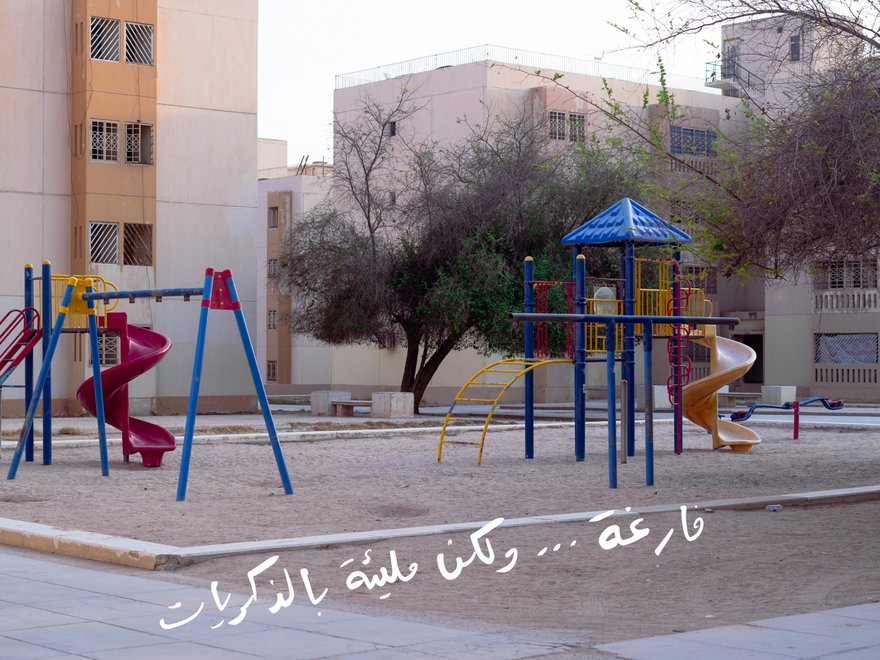
Dalal Al Mutairi. From the project The Red Slide.
“Research fuels me with understanding, but I listen closely to my instincts when making artistic decisions.”
Multidisciplinary artist + Photography MA, 2025
The Red Slide is rooted in childhood memory and absence. You’ve cited influences such as Magnum photographer Diana Markosian, but also spoken about being led by instinct. How does the balance of research and intuition interact in your creative process?
I approach research as an inspiring starting point. I ask myself what I truly learned from artists I admire, such as Magnum photographer Diana Markosian, and how I can carry that knowledge into my own practice without imitation. I often step outside my work and consider how I would want to experience it—as a viewer, how I might feel connected or seen. Research fuels me with understanding, but I listen closely to my instincts when making artistic decisions.
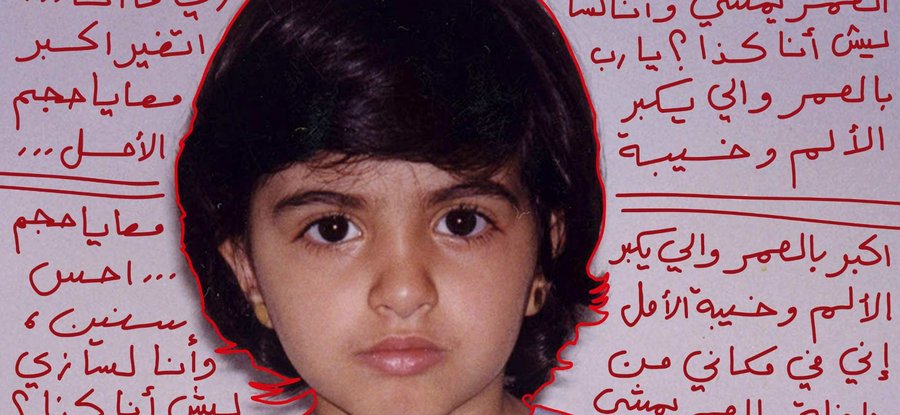
In Time Passes, you layer archival family photographs with drawings and text. What does this act of intervention allow you to say that a photograph alone cannot?
These interventions help me visualise my emotional responses to the images—the memories they awaken and the meanings they hold for me. They allow for an uninterrupted, intimate conversation, free from external influence, where I can express how I experience the photographs and how they make me feel. Through the images, I am able to see my emotions more clearly.
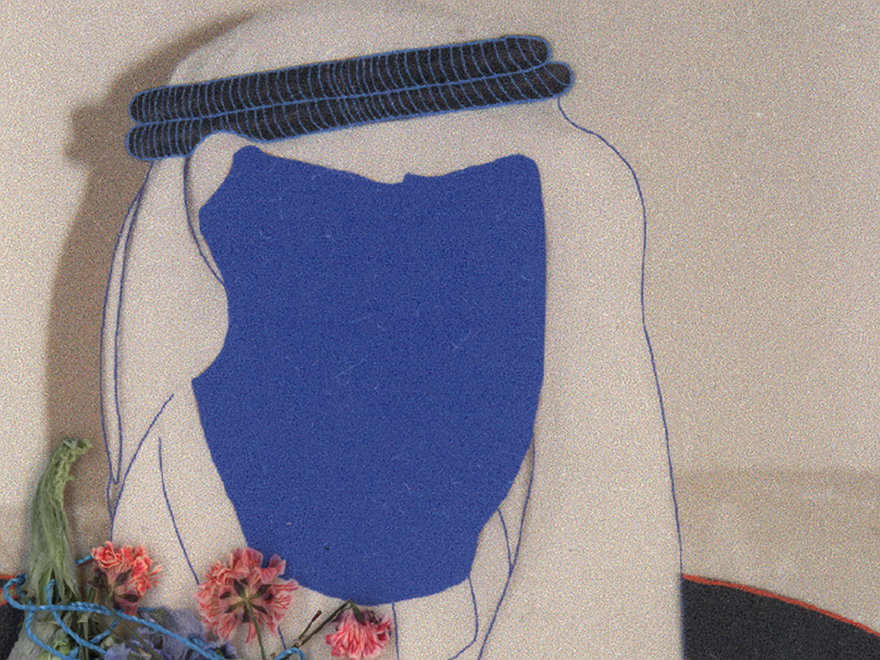
Dalal Al Mutairi. From the series, Time Passes.
“Sharing my personal work in Saudi Arabia and the UK taught me that, beneath cultural differences, we are more alike than we realise. We all have stories to tell, and we all seek to be seen and heard.”
Multidisciplinary artist + Photography MA, 2025
The emotional tone of your photographs feels quiet and restrained. Is this something you consciously construct and if so, how do you work to achieve that atmosphere in your images?
In the early stages, I let everything pour out without censorship. Only later, when I revisit my writing, drawings, and materials, do I begin to recognise where restraint is needed. I intentionally soften the tone, allowing the work to breathe rather than overwhelm. I’ve come to understand that not everything needs to be said—leaving space invites the viewer in. Sometimes, silence speaks louder than words.
You moved from Saudi Arabia to London to study at the RCA. How did this geographical and cultural shift affect the questions you ask through your work?
This experience has profoundly shaped how I ask questions in my work. Being immersed in a new cultural environment, alongside friends, instructors, and classmates, broadened my perspective and invited new ways of thinking and expressing. This shift has had a deeply positive influence on how I approach my practice.
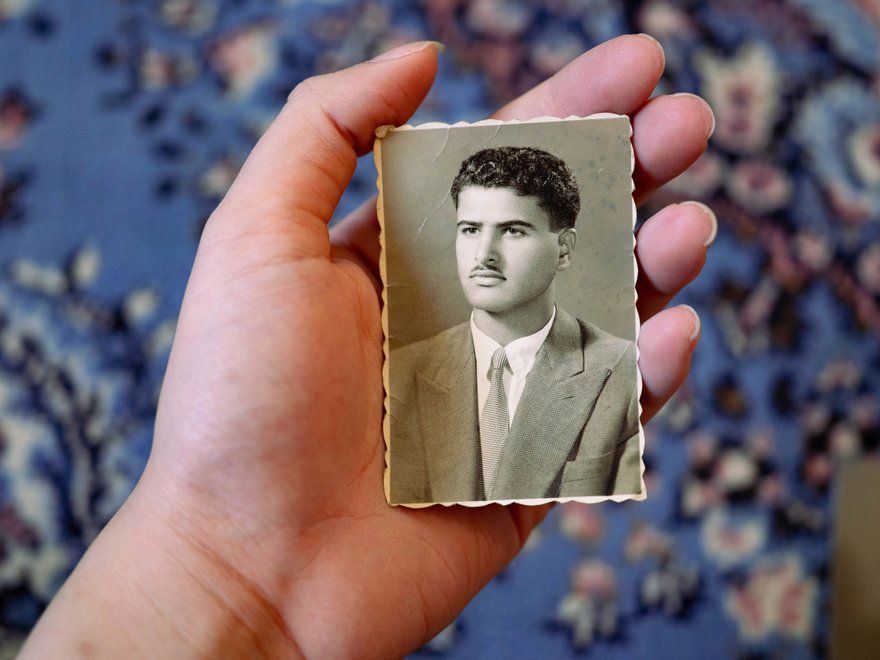
Dalal Al Mutairi. From the series, Jdo's Room, a tribute to her grandfather: Muhammed Al Humayyani.
What drew you to the RCA’s Photography programme in particular, and how has your practice evolved during your time here?
The Photography programme at the RCA approaches photography through a strong fine art lens, which was exactly what I was seeking. I wanted to study at an institution that emphasised theory, critical thinking, and experimentation. Throughout the programme, my practice shifted significantly—it helped me discover my voice and pushed me to work with materials I had never imagined using. This experience transformed how I approach art and continues to influence the direction of my future practice.
Can you describe a moment at the RCA that challenged the way you think about photography or your role as an image-maker?
The feedback I received encouraged me to push myself further, particularly when it was framed as questions rather than answers. This approach gave me the freedom to experiment, learn from mistakes, and reassess the direction of my work, which was essential to my development as an artist.
You’ve shown work in Saudi Arabia and in the UK. Do different audiences respond differently to your images, especially when the work is so personal?
Sharing my personal work in Saudi Arabia and the UK taught me that, beneath cultural differences, we are more alike than we realise. We all have stories to tell, and we all seek to be seen and heard.
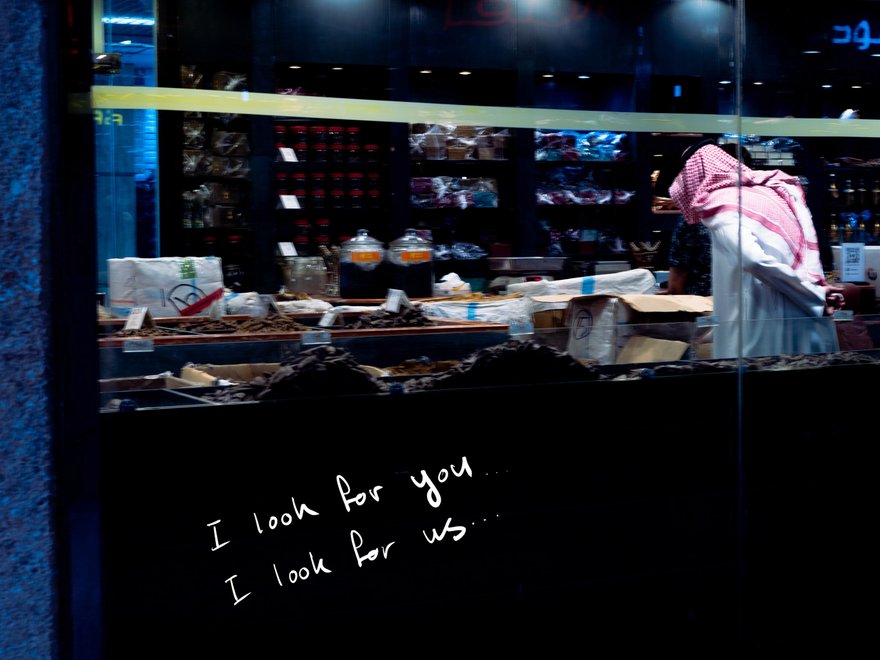
Dalal Al Mutairi. From the series, The Red Slide
What advice would you give to photographers who want to work with personal stories but are unsure how much of themselves to reveal?
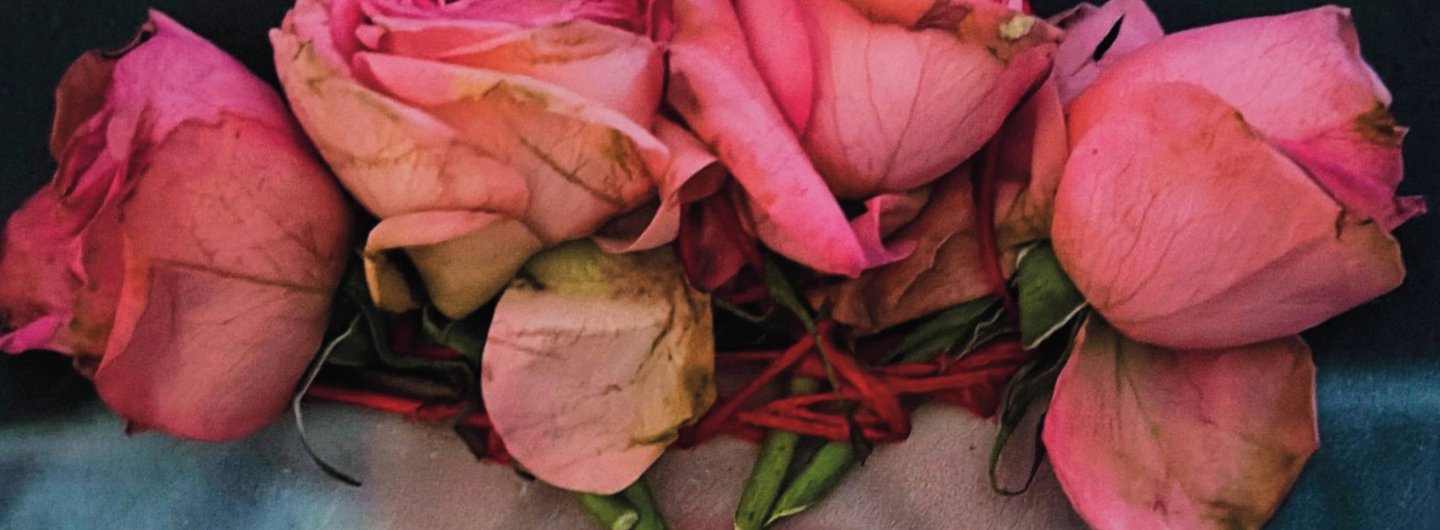
Listen to your gut—your inner voice. Try to see yourself beyond labels, whether they come from yourself or the world around you. Allow yourself to express honestly, and when working with personal narratives, pause and ask if the process has helped you let go. Share with your audience, but gently—leaving space is an act of trust. When you trust yourself, even the quietest gesture, like stitching flowers onto a photograph, can speak volumes.
What’s next for you? What projects are you currently working on?
I am currently exploring grief in my work. My grandmother, with whom I shared an incredibly close bond, passed away in August 2025. Through grieving, I have come to understand that she never really left me. Her presence surrounds me daily—in traditions, in rituals, and in the natural world that reminds me of her. I miss her profoundly, and through this project, I seek to honour the love we shared and the enduring impact she has on my life.