Key details
Date
- 31 July 2026
Author
- RCA
Read time
- 2 minutes
It was with sadness that the Royal College of Art heard news of the passing of David Queensberry, a significant contributor in the history of the College and figurehead in the development of ceramic education.
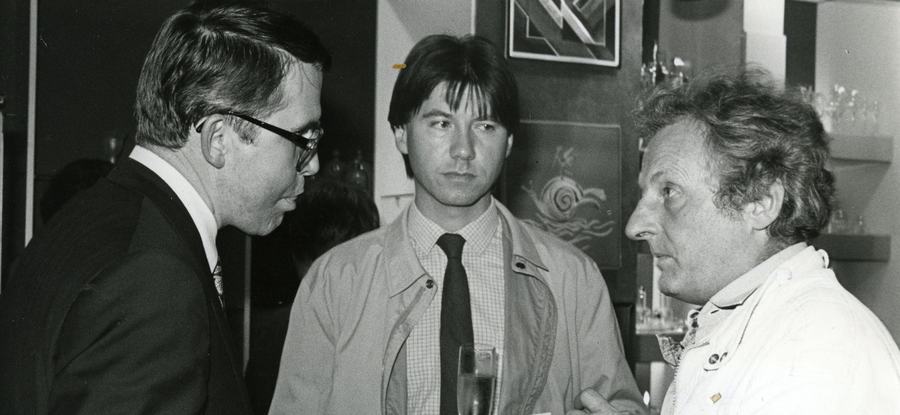

David Queensberry joined the Ceramic School as Professor in 1959 and would continue in this role for 24 years. Through the 1960s and 70s he radically restructured the course, broadening it out from its sole concern with design for the ceramic industry to encompass handmade individual work and fine art practice. He made radical appointments to the staff team with Hans Coper the sculptural ceramic genius who referenced craft and used throwing in new and exciting ways working alongside Eduardo Paolozzi, fine art sculptor and printmaker. David himself led the design strand and operated the Queensberry Hunt design consultancy from the department with ex-student Martin Hunt.
This period also saw the development of hot glass through Sam Herman's specialist leadership and in 1968 the college responded by establishing the School of Ceramics and Glass, allowing the disciplines to share academic oversight and resources while students trained alongside each other with the individual disciplines maintaining specialised leadership under Queensberry's overarching directorship.
It was specifically his appointment of Coper in between '66 and '75, with his emphasis on encouraging individual works and his rejection of tradition, which Queensberry states as ‘the most important thing that I did in 20 years of work at the college’. Along with Paolozzi’s influence this period ushered in a new age defined as The New Ceramics. Many significant ceramists emerged from this period. Notably Alison Britton, Jacqui Poncelet, Carol McNicol and Glenys Barton who all studied together at the same time and opened up exciting new ground in the field. A little later on, graduates such as Robin Levien would continue David’s design legacy while Magdalene Odundo brought her own unique perspective to the vessel and Martin Smith who conducted an early practice led research project would later become Professor of the department himself.
David Hamilton, who also joined the Ceramics staff during Queensberry’s period and later became head of the department, recalls:
“David would arrive by motorbike, bowl into his office on the first floor of the Darwin Building, doff his coat & crash helmet and down cups of coffee. He might have been up for hours and just came from advising Rosenthal on collaborations with artists & designers, from the Reject China Shop he ran in Beauchamp Place, or from overseeing products made in Stoke or maybe from a meeting at the newly formed Crafts Council. It seemed everyone in the ceramics world and beyond sought his advice, opinion & partnership.”
In later years and throughout the rest of his life David remained intimately connected and concerned with the RCA and the teaching of ceramics and in 1990 he was made a Senior Fellow. He always tried to keep informed about the latest production methods and state of the industry, mentored new designers such as alum Maham Anjum and was constantly involved with staying in touch with his vast network of industry contacts, who often became long-standing close friends.
Age never daunted him nor saw David taking a back seat as he saw his second retrospective show at the V&A Museum in 2012 taking place with him well into his 80s.
David often would host small groups of RCA Ceramic students for discussion around his dining table, with him only a few years ago leading a discussion around the 3 billion year old Lewissian Gneiss highland rock glazes that his Business partner at Highland Stoneware had started producing. Students benefited from his incredible wealth of experience and delighted at his repertoire of anecdotes. His influence was significant and international, his contribution to ceramic education led the field, and as a friend and colleague David will be greatly missed.