Key details
Date
- 16 September 2026
Author
- RCA
Read time
- 3 minutes
The RCA today announces a suite of new postgraduate programmes designed to prepare artists, designers, and creative leaders to navigate and shape the complexities of the contemporary world.
Key details
Date
- 16 September 2026
Author
- RCA
Read time
- 3 minutes
Responding to shifting global trends across technology and creative practice, the RCA is launching new master’s degrees alongside extended two-year MFA and MDes pathways within its world-renowned portfolio.
The new and updated offerings include:
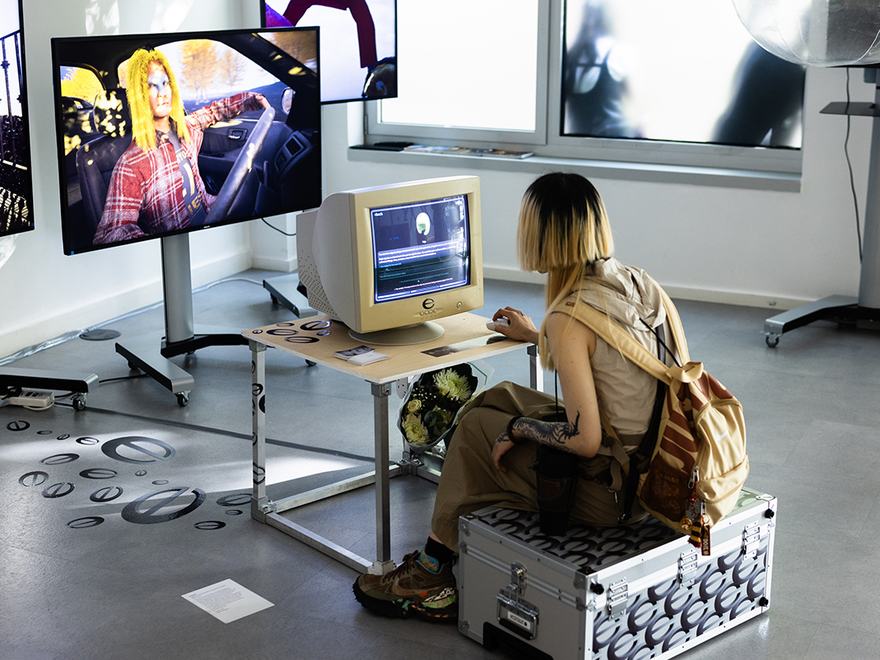
Artificial Intelligence & Digital Art (AiDA) MA/MFA
The Artificial Intelligence & Digital Art (AiDA) MA/MFA programme places artistic agency at the centre of how artificial intelligence is imagined, made and experienced. Conceived specifically for artists, the curriculum combines creative coding and computational practice with critical artistic inquiry, giving students the technical and conceptual agency to construct, alter and interrogate computational and AI systems. At a moment when the direction, pace and governance of AI are increasingly contested, AiDA asserts an urgent role for artistic practice in deciding what forms of intelligence we choose to build, what purposes they serve, and how they shape the ways we understand and live in the world.
Aardman/RCA Animation (Professional Residency) MFA
The Aardman/RCA Animation (Professional Residency) MFA is a 20-month, five-term degree offered by the School of Communication & Design in partnership with world-renowned Aardman Animation and the Aardman Academy. Combining the RCA's academic rigour with professional studio practice, the programme enables students to spend their first year at the RCA in London developing their authorial voice across any technique or genre, before undertaking an immersive professional studio residency at Aardman’s Bristol studios under the mentorship of industry experts.
Environmental Architecture and Urban Design MA
The Environmental Architecture and Urban Design MA programme recognises that environmental and urban processes are increasingly interconnected and uniquely brings these fields together to explore how design can engage with the ecological, social, and political conditions shaping contemporary life and its spaces. Through design-action, design-led research, studio practice, and fieldwork, students explore spatial design as a means of contributing to more just and environmentally responsive futures.
Graduate Diploma Architecture & Spatial Practice
This intensive one-year conversion route bridges non-architectural disciplines for those seeking to pivot into spatial design. Through experimental studio culture, critical inquiry, and London-based fieldwork, the Graduate Diploma Architecture & Spatial Practice equips students with the skills and portfolio needed to unlock advanced study, including pathways into MArch Architecture and professional architectural practice.
Sound Practice MA
Sound Practice MA is an innovative one-year degree at the Royal College of Art that reframes sound not merely as something to create, but as a transformative lens through which to engage with the world. Open to applicants from non-traditional sonic backgrounds, the programme connects creative practice with London's rich sonic landscape to explore new modes of listening, communication, and engagement with the world through sound.
Extended two-year MFA and MDes pathways
A central feature of the new curriculum structure is the introduction of flexible dual routes across selected disciplines. While the intensive 1-year MA routes focus on developing critical and technical agency through an Independent Research Project, the extended 2-year MFA/MDes routes build on this foundation to cultivate sustained artistic research and professional leadership. Artificial Intelligence & Digital Art (AiDA), Contemporary Art Practice, Design Products, Intelligent Mobility Design, and Digital Narrative Arts (formerly Digital Direction) will offer an extended two- year route alongside the one year MA.
Applications for the upcoming academic year open on 12 October to practitioners across diverse disciplines. Prospective students can discover more by reserving a place at upcoming online open days.
These academic updates coincide with wider institutional developments designed to foster cross-disciplinary working and widen participation. The Royal College of Art has recently established a new School of Communication & Design, unifying communication and design disciplines into a single academic hub alongside its Schools of Architecture and Arts & Humanities. This strategic move is aimed at driving interdisciplinary collaboration to address complex global challenges. In a major step toward expanding creative opportunities, the RCA has also recently announced new partnerships forming a collaborative network with top creative institutions across the UK and Ireland, including a partnership to launch jointly awarded undergraduate degrees with Norwich University of the Arts, opening up new pathways for talent from diverse regional backgrounds.