Key details
Date
- 3 June 2026
Author
- Lisa Pierre
Read time
- 13 minutes
Tim Brennan (MA Industrial Design Engineering, 2002) is a visionary innovator whose journey through the world of design and engineering has created a new category in the footwear industry and helped to transform the health of countless individuals. Tim’s design process is characterised by strong foundations in science, engineering and the arts. He has an insatiable curiosity and a passion for bringing groundbreaking products to market.
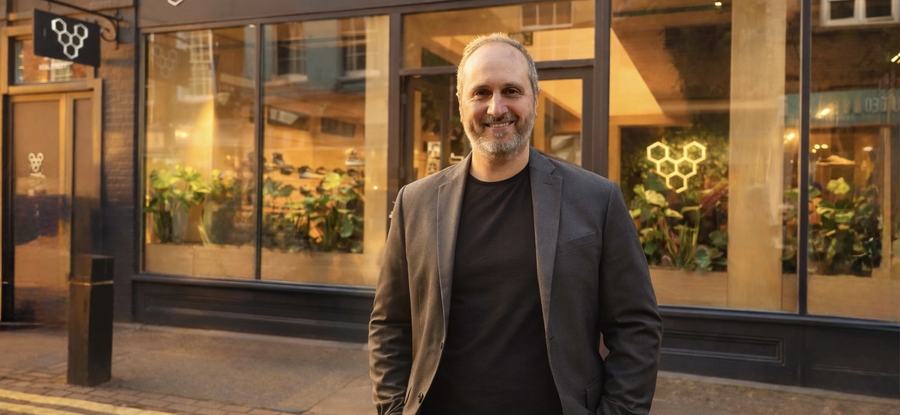
During his studies at the Royal College of Art, Tim developed a new approach to footwear design that allowed the foot to work as nature intended. His shoe, Vivobarefoot, went into production a year after graduating — sparking the modern barefoot running movement. The project introduced a paradigm shift in how people think about footwear and running technique around the world. Tim also pioneered an enhanced mandoline design for improved safety. Rethinking the design of the handguard which had not changed in over 50 years led to a licensing deal with kitchen gadget company Joseph Joseph.
“I believe designers have a major opportunity, and perhaps even a responsibility, to create products that are not only beautiful and culturally desirable, but also deeply supportive of long-term human wellbeing.”
Visionary Innovator
Tim is currently working on his most ambitious project yet — the AirPoise Chair — redefining the principles of chair design. Unlike conventional ergonomic chairs, it removes lumbar support entirely and instead uses an adaptive upper back support to help the body achieve natural alignment. The project explores a unique set of ergonomic principles that create the conditions for balance, with the long-term aim of addressing back pain. Tim’s thinking is that lower back pain is often linked to patterns of upper back hunching, pointing towards a new path for chair design and ergonomics. Following its launch at Isola as part of Milan design week, AirPoise has been successfully licensed to UK manufacturer Ergochair with first deliveries expected later in 2026.
Vivobarefoot acts like a second skin that allows a completely natural interaction with the ground. It was quite a process for you to get to the end product. Tell us about your initial idea and research.
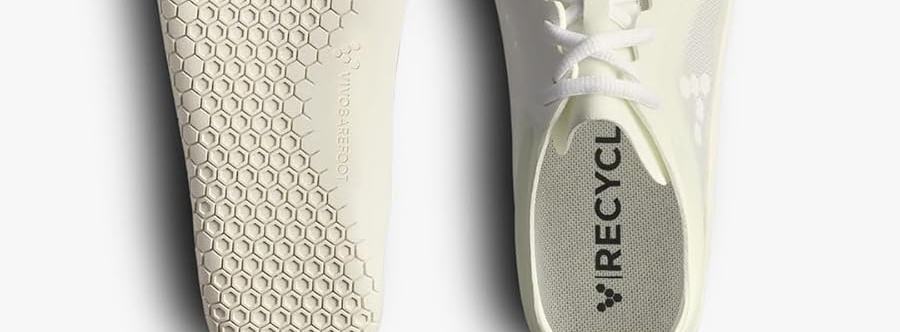
The initial idea came from a very simple question: what would footwear look like if its purpose was not to interfere with the natural function of the foot? At the time, virtually all sports shoes were trying to cushion, control or correct movement. I became interested in the possibility that many of those interventions might actually be causing my ankle injuries and then later I saw that they could be weakening the foot and altering gait for billions of people. My research combined biomechanics, ethnography, prototyping and a lot of trial and error. I was interested not just in the shape of the shoe, but in what it allowed the body to do. That meant thinking carefully about sole thickness, flexibility, toe space and how much sensory feedback the foot receives from the ground. The goal was to create footwear that looked like you were wearing shoes, but secretly it felt like you were wearing thick socks.
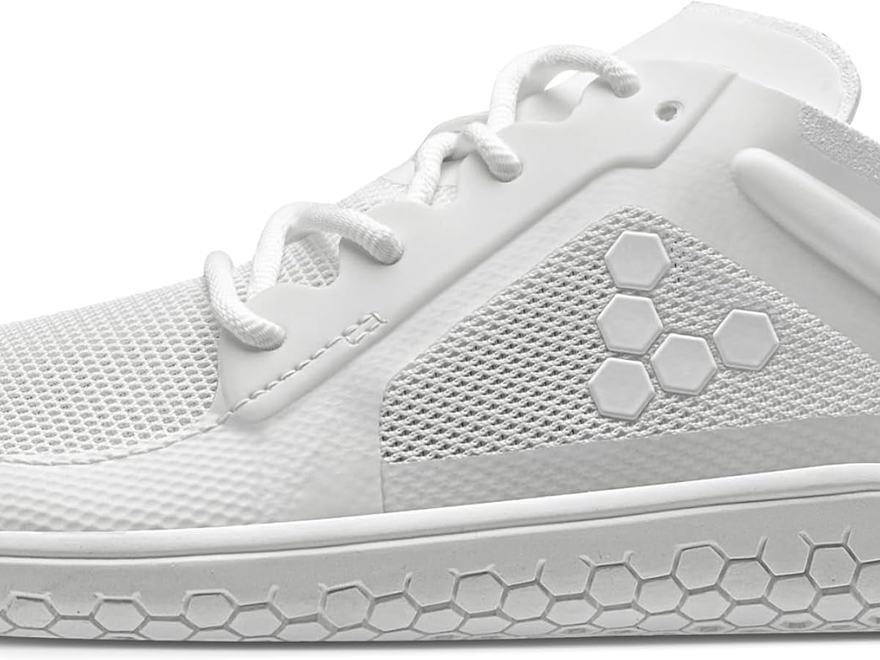
Vivobarefoot
People walk differently with this design shift. Should we really be “Freeing our feet”?
I think society should certainly be asking much more serious questions about what conventional footwear does to the foot in the long term. The foot is an extraordinarily sophisticated structure, and I think it’s a crime how modern shoes restrict its natural movement, dull its sensory role and change the way the whole body organises itself. When it comes to making the transition, I tell people that it is important to do it with intelligence. Building up gradually over several months is the best way so the body has a chance to adapt. If an individual wants to run or play sports in thin soled shoes, I think that is best done with some expert guidance. I say that most people will need to be coached to relearn how to run with the feet landing much more under the body. But in principle, I think allowing the foot to function more naturally is a very important direction, both for athletic performance and for long-term musculoskeletal health.
As a designer you have focussed heavily on the life and health benefits of footwear, are we all too consumed with fashion and style to focus on how current choices will affect long term health outcomes?
As a designer, I’ve spent my whole career thinking about how products affect the human body over long periods of time. What interests me is not only whether something looks good or functions commercially, but also whether it supports or interferes with natural human health. People often assume that harmful design choices are mainly driven by fashion. High heels are perhaps the clearest example — a product where aesthetics have historically taken precedence over biomechanics and long-term physical wellbeing. They have become a symbol of how cultural ideals can sometimes override what is healthy for the body.
I actually think there are products that may be even more damaging, despite having very little to do with fashion at all. Much of the school furniture used in the UK, for example, can negatively affect posture, movement, comfort, concentration, and physical development during important years of growth according to back pain experts. These designs are not driven by glamour or style; they persist largely because they have become normalised and institutionalised. That is important, because it shows that poor health outcomes in design are not only caused by vanity or fashion trends. Sometimes they are caused by habit, convention, cost priorities, or simply a lack of rethinking.
At the same time, there are areas of culture where style, aspiration, and health work together positively. Yoga is a good example. It encourages healthy movement, awareness, breathing, flexibility, and physical wellbeing. In this case, desirability and health are aligned rather than in conflict. So I don’t think the issue is fashion itself. The deeper issue is whether design is connected to an understanding of human biology and natural function. Design is incredibly powerful because it quietly shapes behaviour every day. The objects and environments we surround ourselves with influence how we move, sit, walk, breathe, work, and live — often without us even noticing. In that sense, design is never neutral. It can either support health or slowly undermine it over time. I believe designers have a major opportunity, and perhaps even a responsibility, to create products that are not only beautiful and culturally desirable, but also deeply supportive of long-term human wellbeing. The most powerful designs are often the ones that people are naturally drawn to aesthetically and emotionally, while at the same time helping the body function more naturally and effectively. For me, the future of design is not about choosing between health and desirability. It is about bringing the two together.
“When I arrived at the RCA, it felt like I had finally found the course I was made for. It expanded my thinking far beyond engineering into people, behaviour, culture, communication and meaning. It made me less interested in solving purely technical problems and more interested in asking whether we were solving the right problem in the first place. That combination has shaped everything I’ve done since.”
Visionary Innovator
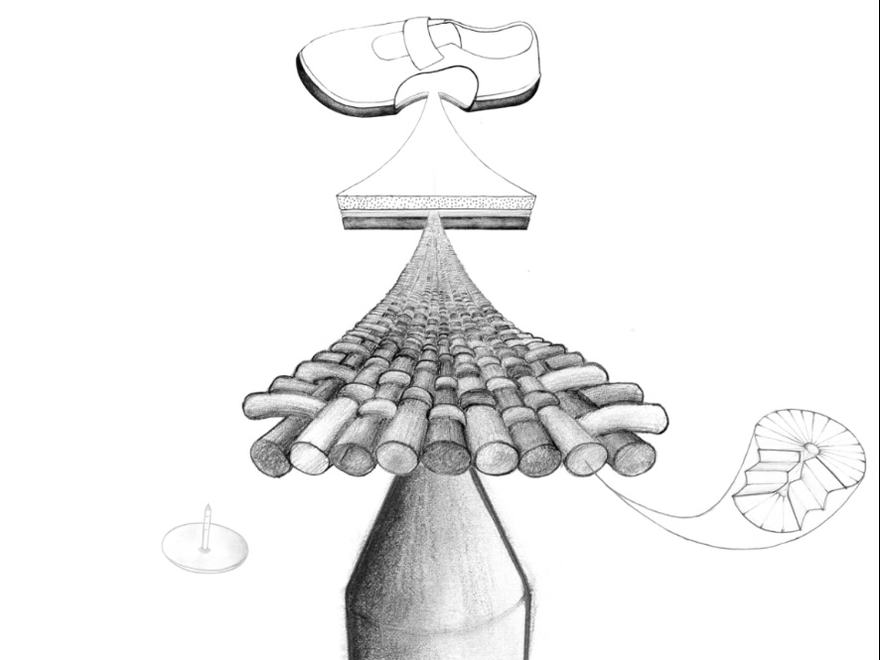
Vivobarefoot construction early design
You came up with the idea for Vivobarefoot when you were a student at the RCA. Were there any other potential designs you were thinking of at that time that didn’t make it?
At the RCA there were several other ideas I seriously considered pursuing. I got quite far with a self-sweeping electrostatic flooring concept, and for a while I was deeply interested in working on a flying car. I also wanted to design school furniture, because even then I was concerned about how the built environment affects health and development. Before I had even started the course, I remember sketching ideas for what I might exhibit at graduation. During the course, choosing which direction to commit to stayed on my mind for months.
I remember an IDE alumnus telling our course that the RCA offered a level of creative freedom you might never experience again in the world of work — that the sky was the limit. I agreed with the first part, but I adjusted the idea slightly. I wanted to use my time there as a springboard — to create an income stream that would give me the freedom to keep working on the projects I believed were most important in the years to come. Vivobarefoot seemed to have the strongest commercial potential as it carried a bigger opportunity behind it: there was an epidemic of ill health caused by shoes and no footwear brand was addressing it. That made the decision a no brainer. Looking back, I think that choice did give me the freedom I was hoping for. With the AirPoise Chair, I feel I’m working on one of the most important projects of my life, so in many ways that ambition has come true.
You came from a mechanical engineering background. Do you think your time at the RCA transformed your way of design and thinking?
Absolutely. Looking back, my engineering degree gave me an incredibly important foundation. It taught me rigour, analytical thinking, problem solving and a deep understanding of how things work physically and mechanically. I still rely on those skills every day. When I arrived at the RCA, it felt like I had finally found the course I was made for. It expanded my thinking far beyond engineering into people, behaviour, culture, communication and meaning. It made me less interested in solving purely technical problems and more interested in asking whether we were solving the right problem in the first place. That combination has shaped everything I’ve done since. The engineering background gives me the structure and discipline to develop ideas properly, while the RCA taught me how design can influence the way people live, feel and interact with the world around them.
As an inventor, designer and entrepreneur you have returned to the College to speak to current students. What are you telling them?
I usually tell them that innovation often begins with questioning assumptions that everyone else takes for granted. If you look carefully, many industries are built around conventions that are rarely re-examined. I also tell them that bringing a product into the world requires much more than a good idea. You need persistence, resilience, commercial awareness and a willingness to keep refining the idea without losing sight of what made it important in the first place.
You say the body works better when it can function naturally. You’ve looked at how we walk and sit, are there any other elements of human functionality you are interested in looking at?
I am interested in all the areas where products either support or interfere with natural human organisation. Breathing, balance, coordination and posture are all fascinating to me. What interests me most is not just the body in isolation, but also the relationship between the body and the designed world around it. So much product design still starts with the object rather than the human being - phones being the most obvious example. Wherever there is widespread ill health, I see the potential for breakthrough interventions. As you can imagine, that opens up an almost overwhelming number of possibilities. The areas I think about most are cardiovascular disease, cancer, and the long-term effects of postural habits that can gradually contribute to injury and disease over time. I think AI and big data have enormous potential to transform health over the next two or three decades, possibly at a scale that would have seemed impossible not long ago. I love seeing technology giving people their lives back. But progress is not inevitable, and I would love to contribute in some way to accelerating those outcomes.
“I do enjoy inventing all sorts of everyday things on a daily basis. However, what drives a very small number of those ideas forward towards mass production is the belief that some ideas are far too important to stay as sketches.”
Visionary Innovator
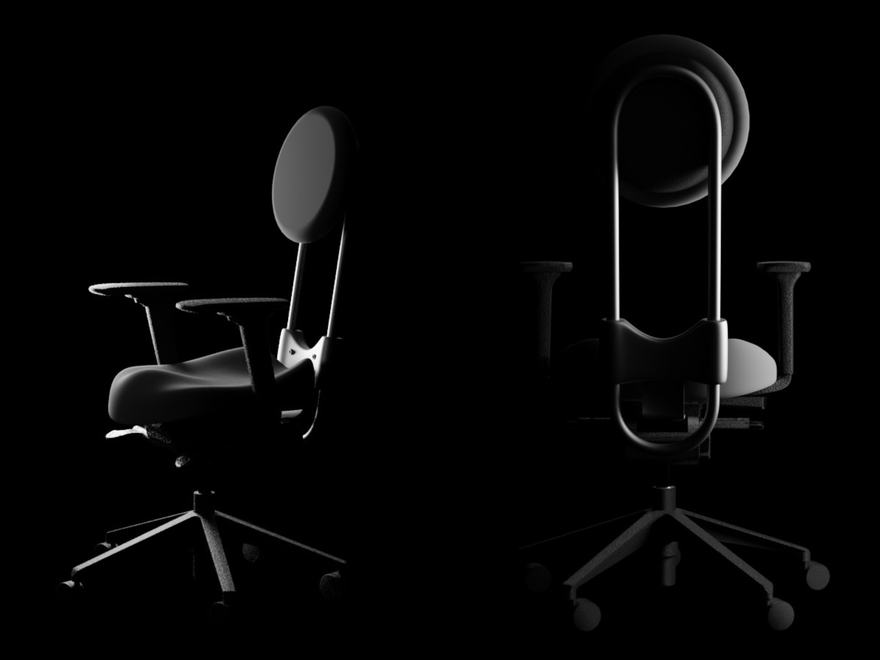
AirPoise - Tim Brennan
Mandoline slicer accidents are one of the most common kitchen injuries. Did one prompt you to rethink the design?
I first heard about the problem from an industry expert. I then spent a couple of months working on the project but wasn’t really getting anywhere. The existing handguard design had remained largely unchanged for about 50 years, and I started to think there might not be any more room for improvement. Then I came across a detailed blog post describing a serious mandoline accident, and from that point on I became determined to figure out how to prevent as many of these injuries as possible. When the problem was told as a personal story, I got really determined to figure this out no matter what. I knew that traditional handguards do not work well with all vegetables, so users often abandon them for certain tasks. What was really needed was a more universal gripping system that could work across a much wider range of food shapes and sizes. The breakthrough came when I started studying the different ways people naturally hold and stabilise food while cutting. The design evolved into a gripper that mimics the adaptability of the human hand.
With Vivobarefoot and your mandolin design you’ve been lucky enough to have the products licensed and used by companies. As a designer, how do you know when to keep believing in your product, and when you realise that it might not work, and move onto something else?
That is one of the hardest judgments in my work. I think you have to separate resistance from invalidation. A product may face resistance because it is unfamiliar, because the marketing isn’t working, or because the market conditions are not right. That is very different from the product being fundamentally not useful or desirable. I tend to keep going when the core insight still feels true and when real-world feedback continues to show that the idea is creating value for people. With both Vivobarefoot and the mandoline design, there was a deeper principle underneath the product that continued to feel valid, even when there were obstacles along the way. At the same time, I do try to stay practical. Often I move on when the companies on my list have passed on the idea and I can no longer see a realistic route to getting it into the world. That said, the decision is rarely completely rational. The longer I work on a project, the more emotionally attached I become to seeing it succeed, so I have to be careful not to confuse personal attachment with genuine potential.
From footwear to kitchen utensils to chairs, the product range is quite eclectic – is this a deliberate choice? And do you think that the same principles of design apply no matter what the product?
I’ve been on quite a meandering journey in my life. The shoes were really born out of necessity. At the time, I felt I could not continue playing competitive tennis without that shoe going into production. The mandoline project came from a different direction. I wanted to become the best inventor I could be, and my mentors encouraged me to study markets carefully and listen closely to what industry insiders were saying. That led me into kitchen products and eventually to the mandoline problem. What connects the projects is a common way of thinking. I am drawn to products where conventional solutions have become normalised, even when they may be suboptimal or even harmful. So yes, I do think the same principles apply across very different categories. You start with the human being, study the problem carefully, challenge assumptions, prototype rigorously and try to create something that is both commercially viable and genuinely better.
“The most powerful designs are often the ones that people are naturally drawn to aesthetically and emotionally, while at the same time helping the body function more naturally and effectively. For me, the future of design is not about choosing between health and desirability. It is about bringing the two together.”
Visionary Innovator
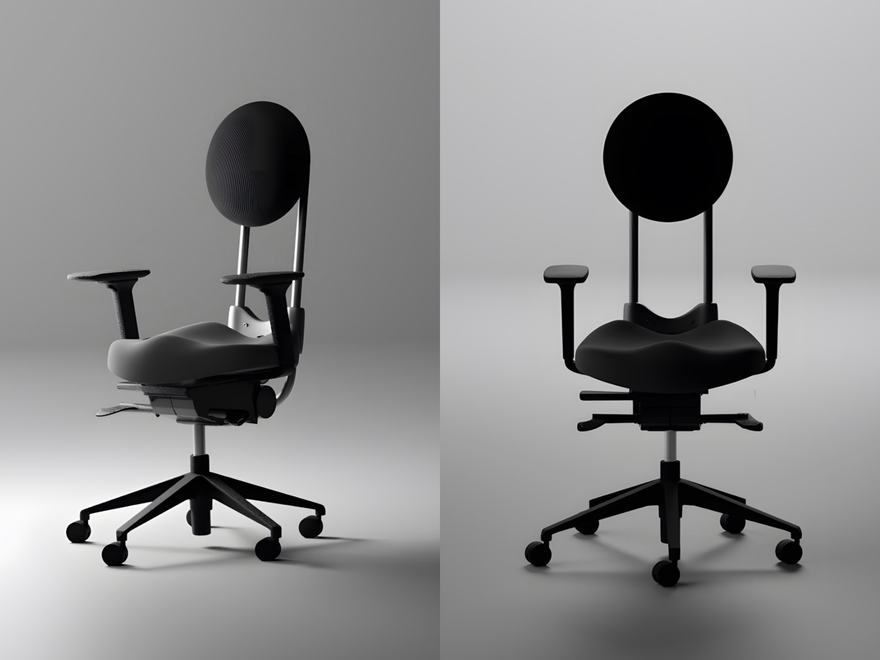
AirPoise - Tim Brennan
Does the inefficiency of a product drive you to create a better one? Are you constantly looking at objects and wondering how they could be better?
Yes, very often and mostly it’s when I am cleaning the house — I often have to stop mid way through to sketch a new cleaning tool or vacuum cleaner accessory. However, they rarely make it past the sketch these days as for the past 6 years I have needed to focus just on the AirPoise chair. It takes a lot of time and focus to bring an idea to market and the chair project has needed everything I have. The 20 components that make up AirPoise have been reworked so many times that I have lost count. The aim is to make the chair as cost effective to manufacture as possible while keeping the ergonomic principles fully intact. I do enjoy inventing all sorts of everyday things on a daily basis. However, what drives a very small number of those ideas forward towards mass production is the belief that some ideas are far too important to stay as sketches.
What can you tell us about your new chair design? Why is it so revolutionary, and why hasn’t it been something that has been done before?
The chair re-explores one of the central foundations of ergonomic seating. Perhaps the single most dominating piece of science has been that a reclined seated position with lumbar support is one of the best positions for the spine. I think that the science is very compelling but the only problem I have with this is that if this were true then Uber drivers should never suffer with back pain and I don’t think that’s the case. I think lumbar support was a great invention 140 years ago, but given that back pain has been the world's number one form of disability for 36 consecutive years, I think there is room for other ergonomic principles and chair designs. The AirPoise Chair takes a different approach. It is designed to create the conditions for balance so that the body’s own postural mechanisms are engaged. It is also designed to address hunching of the upper back, which I believe is one of the root causes of lower back pain. The chair supports the back while still leaving it free to change shape and move naturally, this is made possible by a low-pressure air-filled support system that is currently patent pending.
You say that the chair design is built on a different principle. What's the thinking behind the design?
The thinking behind the chair is that when we are working, we naturally need to move closer towards what we are doing. The anatomy of the body dictates that this movement should come from the sitting bones and hip joints, allowing the spine and head to remain healthy and balanced. However, many chairs encourage something very different. When a seat slopes backwards, it forces this leaning forward to come from collapsing or hunching through the upper back instead. Over time, those patterns can become deeply ingrained, and many people then develop pains and aches in the body and need ways to help restore balance and coordination. I see the AirPoise Chair as part of that process. To work alongside the Alexander Technique, yoga, martial arts and other rebalancing methods by creating conditions that support natural organisation and movement while sitting.
You have changed the way we walk. Would you like to change the way we sit?
Absolutely, yes. I think the way many of us learn to sit at school is one of the root causes of back pain and poor posture later in life. Sitting habits do not just affect sitting itself — they fundamentally influence the way we move during almost every activity. So for me, this goes far beyond designing a chair. I am interested in changing the conditions that shape how people move and organise themselves throughout daily life, and I believe a great deal of that begins with the way we learn to sit as children. I am starting with a high-end office chair because that part of the market has the margins needed to communicate and develop the wider concept properly. At the same time, I have always had ambitions to design school furniture as well. In many ways, I see that as the holy grail of this whole design philosophy, because if you can improve the way children relate to posture, balance and movement early on, I think the long-term impact could be enormous.