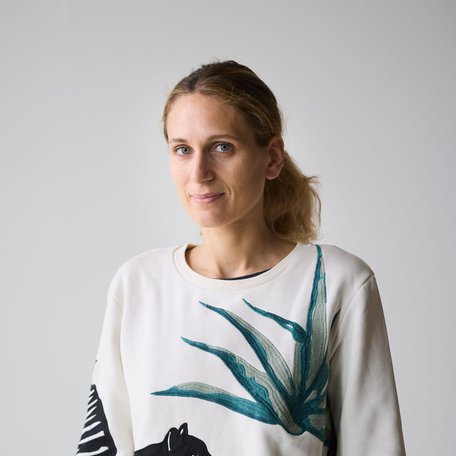
Chiara Tommencioni Pisapia
Wool ecosystemic perspective: mapping multilevel potentialities in wool production networks to support holistic wool valorisation in a context of regenerative transition
Environmental concerns and the compelling need to operate within planetary boundaries result in the search for novel approaches to support the transition to materials which are ecological and regenerative. Wool is a natural, renewable fibre with invaluable intrinsic characteristics produced by sheep whose grazing can offer a regulatory service to the ecosystem. If sheep are farmed according to regenerative farming standards, the extracted wool can achieve carbon neutrality, thereby becoming a well-equipped and beneficial player in a regenerative context. Additionally, wool is one of the purest sources of keratin, a remarkably versatile protein. Its recovery from end-of-life and low-grade wool presents worthwhile applications in different industries. Wool and wool keratin processing encompasses a vast array of transformation methods, ranging from rural, craft-based approaches to cutting-edge biotechnologies, resulting in a wide range of applications that address diverse societal needs. However, wool is still underutilised and, despite extensive study, is mainly examined through siloed perspectives. Regenerative approaches suggest considering materials holistically, in their interconnections with the multiplicity of entities, including forms of life, non-living natural entities, and artificial entities, necessitating the comprehensive consideration of all ecosystem actors — humans and non-humans — in their interconnections and symbiotic co-evolution. This research aims to investigate wool ecosystemic complexity through adopting a research-through-design approach and leveraging the concept of affordances and visualisations to unpack its complexity and reveal insights for the adoption of an ecosystemic perspective in the context of regenerative transition in the field of wool innovation.
Key details
School, Centre or Area
Supervisors
More about Chiara
Biography
Chiara Tommencioni Pisapia is a design researcher. As part of her PhD research, she completed a visiting research placement at the Centre for Novel Agricultural Products, Department of Biology, University of York (2022), investigating interdisciplinary design-science collaboration in the context of the biochemistry investigation of Common Cloth Moths' enzymes. Chiara worked as a Research Assistant at the RCA MSRC and for the Textiles Circularity Centre on various commissions (2020-2024). Previously she worked as fashion textile design intern and assistant in fashion luxury brands and in sustainability-led fashion SMEs (2010-2020), as pro-bono design consultant in the not for profit sector supporting the setting up of a fashion-led social enterprise in Myanmar (2015) and as part of Design for Good program supporting a Liberian NGO on the theme of feminine hygiene addressing SDG 6 (2022-2023). Her research interests include regenerative approaches for materials culture innovation, wool ecosystems and interdisciplinary interactions. She applies theoretical concepts to develop pragmatic tools for design-led investigation that unpack complex systems for the sustainable transition. Chiara’s design work has been exhibited internationally at the Vienna Biennale for Change (2021), the London Design Festival (2019), Dutch Design Week (2019), and Milan Design Week (2019).
Degrees
MA Material Futures, Central Saint Martins, University of the Arts London, 2016 – 2019.
BA Fashion Design with Knitwear, Central Saint Martins, University of the Arts London, 2012 – 2016.
BSc/BA Economics and Management of the Arts, Università Cattolica del Sacro Cuore Milano, 2006 – 2009.
Experience
Research Assistant, Textiles Circularity Centre / Burberry Materials Futures Research Groups, Royal College of Art, London, January – April 2020, March – April 2021, December – June 2022.
Materials Researcher, Consumer21 Ltd, London. July – August 2019.
Textiles Production / Textiles Design Intern, Phoebe English Ltd, London. June 2014 – May 2015, November – December 2019.
Design Consultant, BusinessKind Myanmar (BKM), Yangon. June – August 2015.
Knitwear Design Intern, Katie Jones, March – May 2015.
Knitwear Design Intern, From Somewhere by Orsola de Castro, London. October 2014 – January 2015.
Embroidery Design Intern, Alexander McQueen, London. June – October 2013.
Embroidery and Womenswear Design Intern, Marchesa Ltd, New York City, June – August 2012.
Funding
RCA PhD Studentship scholarship, 2022-2027
RCA Research Placement Scheme, 2022
RCA PGR Conference and Event Fund, 2022, 2023, 2024 & 2025
Exhibitions
Milan Design Week, Ventura Futures, Material Futures, April 2019.
Yksi Expo, Milan Re-Used: A Selection Of Sustainable Projects, Eindhoven, May – June 2019.
London Design Festival, Open Cell, Biodesign Here and Now, September 2019.
Dutch Design Week, Veem, United Matters, October 2019 .
Lille Design Capital, A Labour of Love, August – November 2020.
Vienna Biennale for Change, Climate Cares, MAK, May – October 2021.
Publications
Ribul, M., Lanot, A., Tommencioni Pisapia, C., Purnell, P., McQueen-Mason, S., Baurley, S. (2021) ‘Mechanical, chemical, biological: Moving towards closed-loop bio-based recycling in a circular economy of sustainable textiles’, Journal of Cleaner Production, 326(October), p. 129325. doi: 10.1016/j.jclepro.2021.129325
Tommencioni Pisapia, C., Highley, B., Ribul, M., Baurley, S., Bruce, N.C., 2024. Webbing Clothes Moths from pest to opportunity: a reflective case study in interdisciplinary design-biology collaborations, in: DRS2024 Boston. Resistance, Reflection, Recovery, Reimagination. Presented at the DRS2024 Boston, Boston. https://doi.org/10.21606/drs.2024.947
Barrios-O’Neill, D., Ribul, M., Tommencioni Pisapia, C., Yan, Y., Rungta, D., Selby, L., … McQueen-Mason, S. (2025). Learning by Transforming: Widening Access to Complex Circular Economy Science using Experimental Design. Proceedings of the 6th Product Lifetimes and the Environment Conference (PLATE2025), (6). https://doi.org/10.54337/plate2025-10353