
From systematic design to designerly knowing: codifying epistemic drift at the RCA’s Department of Design Research 1965–85.
Design has always promised progress; its memory, less so. The records that show how ideas actually travelled – memos, slides, prototypes, who really did the work–tend to sink into filing systems and out of sight. A new doctoral project at the Royal College of Art proposes a remedy that is both archivist’s craft and software product that turns a storeroom of documents into a machine for thinking.
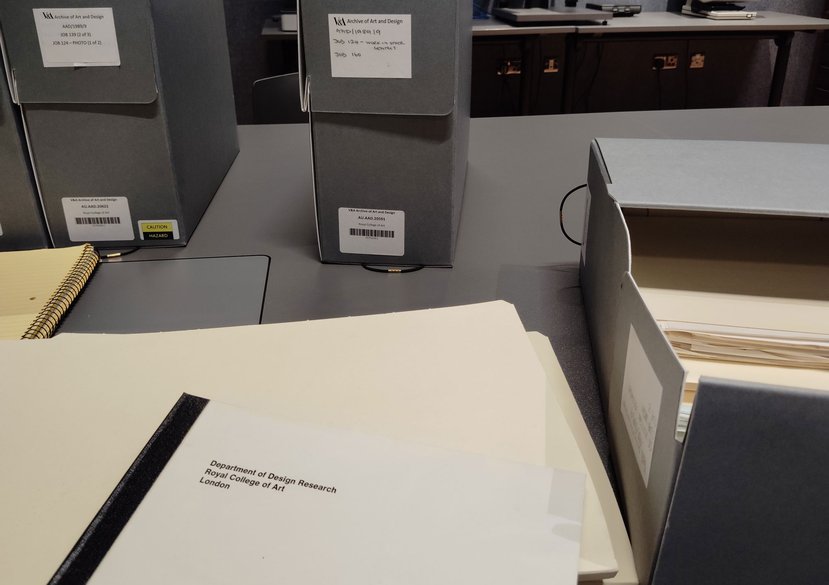
The project rebuilds the RCA’s Department of Design Research (1965–85) as a living knowledge graph. The familiar archival backbone – fonds, series, file, item – stays put, but each piece is cross-linked to people, funders, methods and outcomes. History becomes navigable as a network of decisions. On top sits an explainable AI that behaves less like a conjuror and more like a diligent analyst. Ask what shifted when participatory methods arrived, or how systems talk morphed into practice, and it returns documents, images and minutes clustered by meaning, with sources, confidence and change-logs attached. Every claim shows its working.
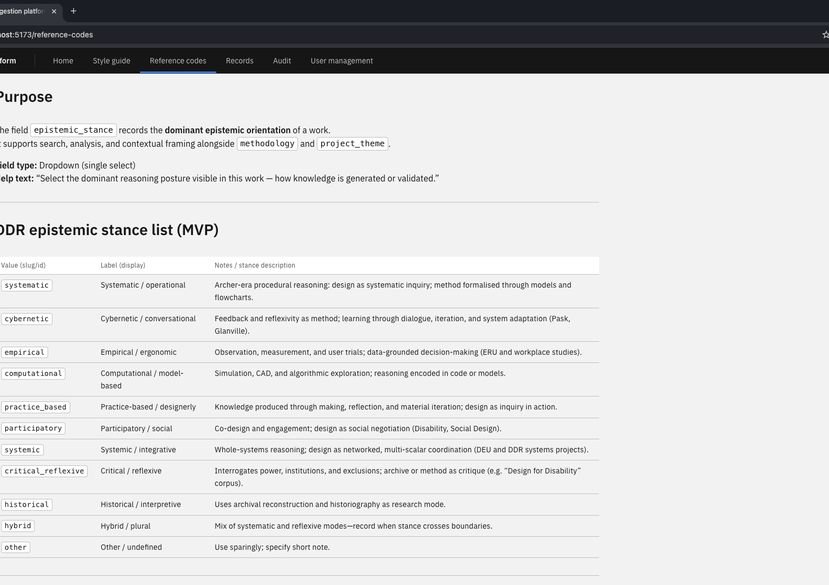
This is not design history as coffee-table comfort. It is operational memory: a system that lets researchers, curators and teams reuse precedent without reinventing it. Classification here is not clerical tidying but an argument. Labels carry provenance and dissent; corrections are treated as first-class data. Absence becomes legible evidence – who is named, who is not, and what that silence did to the story. Hidden labour can be traced across roles and years. The archive stops whispering and starts to speak plainly.
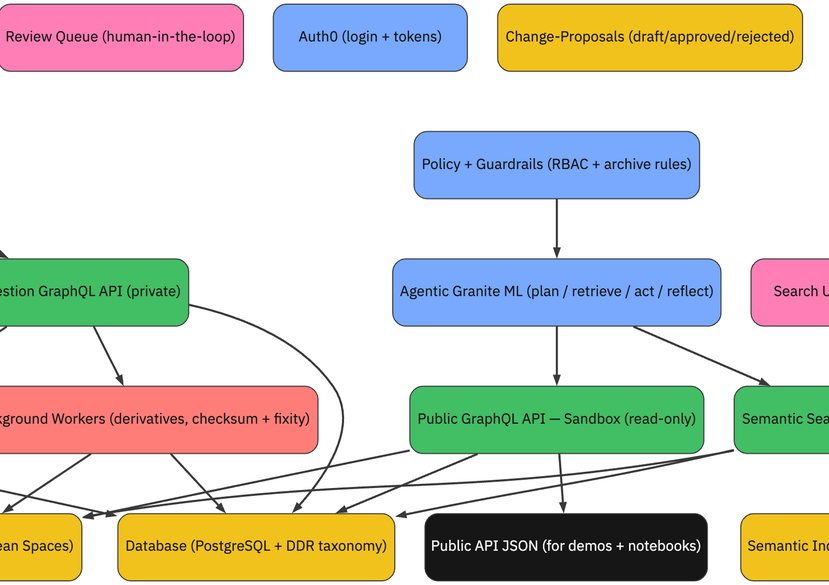
There is also a quiet ethics at play. Rights, fixity and audit trails are coded in rather than bolted on. The AI is “agentic” – it can plan, retrieve, act and reflect – yet remains accountable: no answer without a breadcrumb back to source. In an era of confident hallucination, that insistence on traceability is a public service.
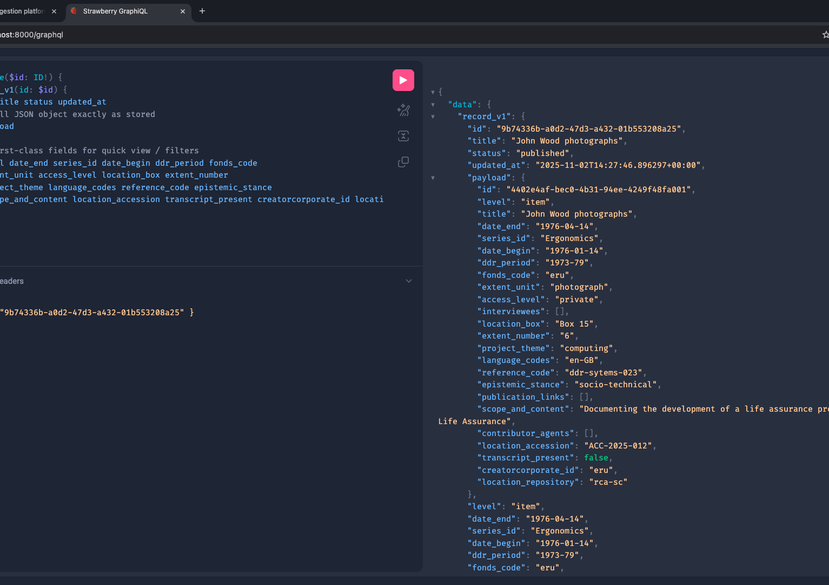
Technically, the architecture is refreshingly sober. A React front end for search and tools; a FastAPI/GraphQL service over PostgreSQL; object storage for media; a private ingestion lane with human-in-the-loop review and background workers for derivatives and checksums. A semantic index powers retrieval; a read-only GraphQL sandbox and JSON exports keep it open; Auth0 and RBAC keep it behaved. It is the sort of stack you could explain to a trustee without blushing.
What emerges is a pattern others can lift: explainable RAG over a standards-aware graph, built to be argued with. The prize is not a prettier catalogue but a working model of how design knowledge is made, maintained and revised – in public, and on the record. If design wants influence, it needs memory. This is memory with teeth.
Beneficary audiences
Design historians: compare across projects/years; surface exclusions; cite with traceable provenance.
Digital design and product teams: reuse the graph+RAG pattern for other messy corpora; ship explainable features.
GLAM and research organisations: activate dormant collections; publish APIs and evidence packs, not just PDFs.
Pedagogy and public programmes: turn archives into interactive curricula–archives that teach through use.
Key details
School, Centre or Area
Area of expertise
Supervisors
Gallery
More about Graham
Biography
Graham is a specialist track consultant in digital innovation, design research and knowledge systems, an IoD certified director and ex Factory Records. He combines over 30 years of creative expertise and teaching in Asia Pacific with cutting-edge doctoral research in systemic design, design history, and artificial intelligence at the Royal College of Art’s School of Communication.
Degrees
MRes RCA Communication Design, PGCHE (Falmouth University), BA (Hons) Graphic Design (London College of Printing)