Key details
Date
- 27 April 2026
Author
- RCA
Read time
- 3 minutes
The EPSRC’s Vacation Internships scheme gives undergraduate students a taster of what it is like to do research.
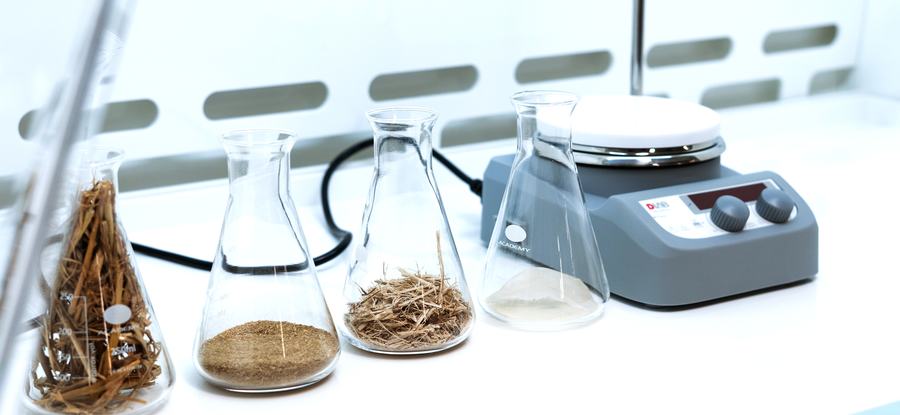

Students are given practical, first-hand experience of working on and carrying out research in a UK university.
The Engineering and Physical Sciences Research Council (EPSRC) has offered the Royal College of Art additional funding to deliver undergraduate vacation internships in summer 2026. We are aiming to recruit five internships to work with us for 10 weeks during the summer of 2026.
Student eligibility
To be eligible for the internship, students need to be:
- Registered for a first degree at a UK institution in a subject that falls within the remit of EPSRC
- In the middle years of their undergraduate course
- Able to fulfil EPSRC’s doctoral training grant eligibility requirement at the end of their undergraduate degree.
Please note that this funding cannot be used as a bridge between an undergraduate degree and a PhD or any other work. Students who are currently in their final year, and who will have completed their degree by the summer, are not eligible.
If your application is successful, you will undertake a paid, independent research project supervised by academics at Royal College of Art.
Internship projects
Available projects range from research data visualisation to supporting research projects on emerging voice technologies or biobased and biofabricated materials. See below for detailed descriptions of each project.
Indicative timeline
- End of April: recruitment call for applications opens
- 17 May 2026, 11.59pm: deadline for applications
- End of May: interviews to take place
- June – August 2026: projects will take place
About the role
The successful candidate will join a team researching one of the projects listed above.
The role will be supervised by a team in each research project and will develop skills and experience in:
- planning and conducting research investigations and methods;
- scientific review and data analysis;
- presenting outcomes of research to different audiences;
- Involvement in meetings and discussions about the research you are working with.
Skills and experience
Essential
- Studying towards a degree in a EPSRC remit related subject
- Evidence of ability to work in a multidisciplinary team
- High level of accuracy and attention to detail
- Good level of digital literacy and proficient in the use of productivity suites (email, calendar documents, spreadsheets, databases) such as Microsoft Office or Google for work
- Good understanding of standards around managing, protecting and re-using information, including information security best practice and data protection principles
- Excellent communication skills with people at all levels
- Evidence of the ability to adapt, use initiative, multi-task and work as part of a team.
Desirable
- An enthusiasm to work for EPSRC projects
- Experience of research methods and data analysis.
How to apply
To apply, please visit our Vacancies page and select the internship project you are interested in applying for.
You'll be asked to submit a CV and a personal statement (500 words maximum) indicating what you see your contribution to the project would be, along with an interim academic transcript in the uploads section. Please also supply an academic reference in the referees section.
The deadline for applications is 17 May 2026, 11.59pm. Interviews will take place towards the end of May.
Please email studentships@rca.ac.uk if you have any questions about the internships.
Frequently asked questions
Who can apply for this internship?
The scheme is designed for undergraduate students to gain hands-on research experience. To be eligible, you must be in the "middle" of your degree:
- 3-year degree: You must currently be in Year 2.
- 4-year degree: You must currently be in Year 2 or Year 3.
I am in my first or final year. Can I apply?
Unfortunately, no. Students in their first year or those graduating this summer (final year) are not eligible for this specific scheme.
Can postgraduate students apply?
No. This programme is strictly for undergraduate students to help them explore research before they reach the postgraduate level.
What should I include in my CV?
Your CV should provide a clear snapshot of your background. Please include:
- Personal information: Contact details and a brief profile.
- Education: Your university, current degree, and relevant modules.
- Experience: Any work history or volunteer roles.
- Other: Any extracurricular activities or skills relevant to a research environment.
What are the requirements for the Personal Statement?
Your statement should be no longer than 500 words. It must cover:
- Why you are interested in this specific internship.
- Which project you want to work on and why it appeals to you.
- The specific research activities you hope to engage with.
Am I allowed to apply for more than one research project?
Yes, you may apply for multiple projects, but you must follow these steps:
- Separate applications: Complete a new application form for each project.
- Ranking your choices: Clearly state your order of preference (e.g., 1st, 2nd, and 3rd choice) on your forms. This helps us during the final decision-making process.
Please note that late or incomplete applications may not be considered.
About the projects
Dynamic and Accessible Visualisation of Helen Hamlyn Centre for Design’s research projects
Project lead: Professor Hua Dong
In the digital age, data visualisation has emerged as a fundamental tool for communicating complex information, enabling users to identify insights that would otherwise remain hidden in raw datasets. However, the more dynamic and visually engaging the tools become, the more difficult they remain accessible and inclusive. Features that enhance interactivity and appeal for sighted or digitally fluent users often introduce barriers for those with different access needs or limited digital literacy. Research found that mainstream visualisation tools, despite their technical sophistication, offer limited accessibility support - typically restricted to alternative text or static data tables - and rarely enable meaningful exploration for blind or low-vision users. Sophisticated (e.g., interactive) data visualisation can be overwhelming and confusing for users in general.
The research question is: How can data visualisation be designed to be accessible for diverse stakeholder groups, while supporting dynamic interaction? A dynamic visualisation strategy has been developed through a funded research project, and this EPSRC internship project will be focused on applying the strategy to visualise the Helen Hamlyn Centre for Design (HHCD)’s selected research projects. The HHCD can accept 1-3 interns, each will be visualising around 30 projects (organised by themes, e.g., health and wellbeing), and the interns (if two or three are successfully recruited) will also help build a physical prototype for an ongoing data visualisation research project.
In this project, inclusive design principles will be embedded from the outset. A structured approach will be followed, which has three phases: data collection using a structured template, iterative design development, and accessibility evaluation.
The interns will:
- Follow a structured approach to help build the project database;
- Explore engaging means of visualisation (e.g. using images);
- Learn the data visualisation strategy and apply it to visualising the data base;
- Present the visualisation outcome at the HHCD team meeting and get feedback for further improvement;
- Get involved in an ongoing data visualisation project to assist with iterative; prototyping, and learn key research and design application skills.
Future of Voice: AI, Listening Infrastructures, and Democratic Publics
Project lead: Dr Adam Kaasa
This project will support the development of Future of Voice, an interdisciplinary research strand examining how emerging voice technologies are reshaping trust, authority, listening, and participation in public life. The internship will directly contribute to a confirmed public-facing event on 30 June 2026 developed in partnership with the London Festival of Architecture and IKLECTIK, the experimental music venue and research-facing cultural partner whose current programme foregrounds technologies and infrastructures of listening and democracy.
The project begins from a timely question: what becomes of “voice” under conditions in which speech can be cloned, detached from the body, synthetically generated, and circulated across platforms at scale? While contemporary debate often focuses on misinformation or technical novelty, this project asks a broader and more foundational question about the role of voice in democratic culture. How does trust operate when vocal presence is no longer a reliable sign of embodied presence? What happens to authority, testimony, and public address when voices are increasingly disembodied, automated, and reproducible? How might we distinguish between linguistic voice, non-linguistic vocality, and machinic voicing in emerging public spheres?
The internship will support a state-of-the-art review across relevant technical and interdisciplinary fields, drawing together research on AI voice synthesis and cloning, speech technologies, human-computer interaction, platform dissemination, and questions of public trust, civic communication, and listening. Alongside this research, the student will contribute to the design and delivery of a live knowledge-exchange event bringing together perspectives from science and engineering, arts and humanities, sonic practice, and public debate. The project therefore offers both research training and experience of producing a public interdisciplinary event.
For the undergraduate intern, this placement offers a distinctive opportunity to work across science, technology, and the arts on a live and externally facing project. They will gain experience in literature review, mapping an emerging field, synthesising technical and critical materials, and translating research into public engagement. The internship will also provide mentored insight into how research can move between academic enquiry, cultural production, and civic discussion. In this sense, the project aligns strongly with EPSRC’s interest in technological change and its wider societal implications, while giving the student hands-on experience of collaborative research in a university environment.
The topic aligns with EPSRC remit through its focus on emerging voice technologies, AI systems, and their public implications. For recruitment we will look for students learning in computer science, electronic engineering, AI/data science, acoustics, audio technology, or human-computer interaction.
Towards developing an experiential design framework for biomaterial fabrication
Project lead: Dr Bruna Petreca
Biobased and biofabricated materials are increasingly recognised as important for more sustainable futures. However, their transition from technical development to meaningful uptake in design and society remains slow. Research on innovation and commercialisation shows that sustainable technologies and new materials often take decades to move from invention to widespread use. This challenge is particularly acute for microorganism-based biomaterials, which, despite their promise, still lack clear pathways to integration, positioning, and acceptance. Additionally, their uptake is not determined by technical performance alone, but also depends on how their qualities are experienced, interpreted, and valued in practice. Research in material-driven design has shown that materials are encountered through experiential dimensions (sensorial, affective, interpretative, and performative), which are central to design decision-making.
If microorganism-based biomaterials are to become more socially and commercially viable, experiential qualities need to be brought earlier into the fabrication process. Building on existing work in multi-microorganism 3D biomaterial fabrication, the project will host two interns to contribute to current RCA research towards developing a design framework for microorganism-based biomaterial fabrication informed by experiential qualities. The overarching aim is to connect materials manufacturing and development with the human experience of materials, so that fabrication is informed not only by technical and functional criteria, but also by how materials are sensed, understood, and valued in design and use. Thus, the project responds to growing recognition that the aesthetic and experiential dimensions of sustainable materials require greater attention, and that embodied forms of tinkering can play an important role in developing knowledge around material qualities and possibilities. We hypothesise that this integration is necessary to realise a more sustainable future material system.
The work will consist of four interconnected strands. First, it will develop methods to characterise the human experience of microorganism-based biomaterials, focusing on how their aesthetic and sensory qualities are perceived, as well as on experiential judgments of quality, durability, and longevity. Second, it will develop laboratory protocols to support the systematic fine-tuning of material properties in relation to these characterised qualities. This will allow the project to explore how fabrication variables can be adjusted not only to achieve technical outcomes, but also to shape intended experiential effects. Third, it will develop a samplebook that documents and illustrates the effects of experientially fine-tuning microorganism-based biomaterials, making visible the relationship between fabrication choices and resulting material experiences. Fourth, it will conceptualise an initial design framework for microorganism-based biomaterial fabrication, informed by experiential qualities, to support future research and practice in this area.
The project will focus on microorganism-based biomaterials relevant to fermentation and 3D fabrication processes, such as SCOBY and bacterial cellulose. Biofabrication methods, including the usage of the Hydra bioreactor, will be closely explored alongside sensory characterisation. It is expected that this pilot study will contribute to the later formalisation of the ‘Biomaterial Immersion’ design framework & methods, which will then be iteratively applied during biomaterial innovations in the Centre for Materials Science & Culture (CMSC) Bio Lab (further research) and commercial biomaterial developments (translational impact).