
(re)Present with: Collective Research for Environmental Knowledge Transmission
This practice-based thesis develops (re)present with as a situated methodology for supporting intergenerational environmental knowledge transmission at the community scale. It begins from a representational problem: environmental change is not only described through maps, surveys, classifications, policy categories and scientific images; it is also materially shaped by them. In མཛོད་དགེ (Zoige), at the eastern edge of the Tibetan Plateau, national development, conservation and restoration schemes have repeatedly represented the land through external categories, including marshland, wetland, biodiversity hotspot and carbon-rich peatland. These representations have made མཛོད་དགེ (Zoige) legible as an object of productivity, ecological protection, restoration and climate governance, while often leaving less room for local ways of knowing the land as a shared living space for humans, animals, deities, waters, grasses and other more-than-human beings.
The thesis asks how research might move from representing མཛོད་དགེ (Zoige) as an object of knowledge towards (re)presenting with the human and more-than-human relations through which local environmental knowledge is formed, maintained and transmitted. Drawing on participatory and community-based action research, and informed by Indigenous research frameworks, the thesis understands research not as a pre-designed intervention but as a collective process shaped through long-term engagement, local ethics, lived experience, everyday labour and situated accountability. As a researcher working with local pastoral communities, I also examine how my own positionality, methods and assumptions were unsettled through fieldwork, hospitality, language, friendship, familyship and shared environmental practice.
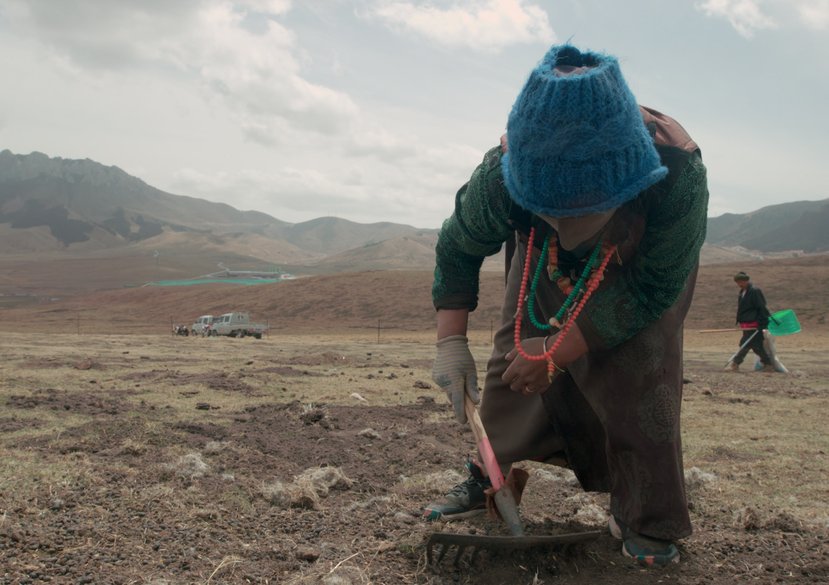
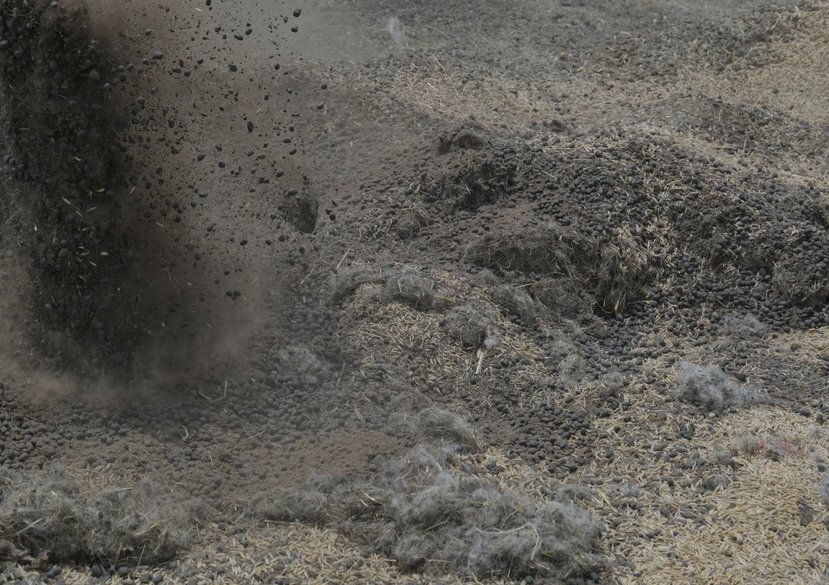
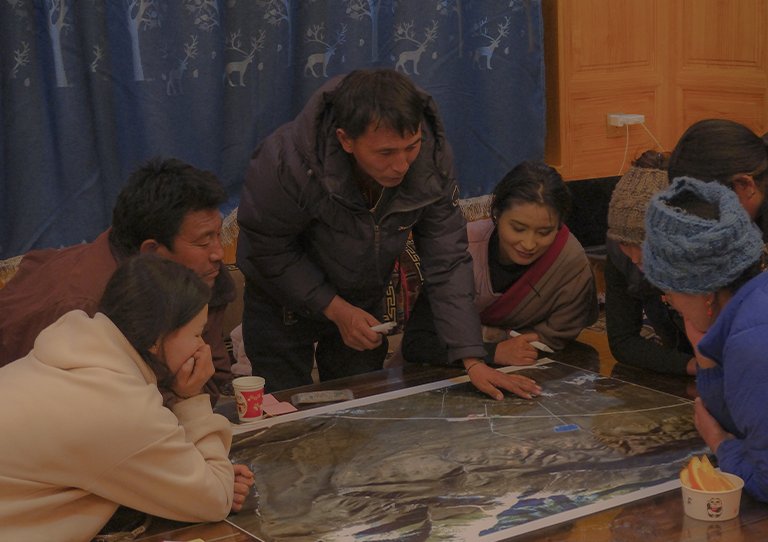
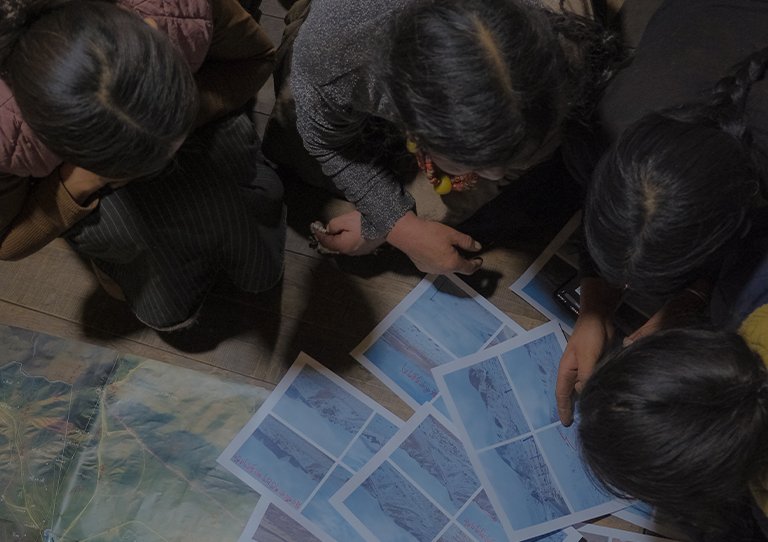
Drawing on early engagements with མཛོད་དགེ (Zoige) from 2021 and sustained fieldwork between 2023 and 2025, the thesis traces three connected movements. First, it analyses how state-scientific modes of representation have participated in མཛོད་དགེ (Zoige)’s socio-environmental transformation. Second, it develops the concept of མཛོད་དགེ (Zoige) as a plurihome: a place shared across different scales by humans and more-than-human beings. Third, it examines how collective practices — including environmental memory sessions, a letter to the community, seed collection and collective grass seeding — became situated conditions through which local knowledge could be recalled, re-created, questioned, circulated and acted upon.
The thesis argues that (re)present with does not offer a universal model for environmental restoration or community participation. Rather, it proposes a methodological orientation for practice-based research concerned with environmental representation, community knowledge transmission and situated accountability: one that understands representation as a relational, ethical and material practice. Through this orientation, architectural practice is expanded beyond buildings, plans or spatial images, and becomes a way of making and sustaining situations in which land-based knowledge, collective care and socio-environmental relations can continue.
Key details
Area of expertise
Supervisors
Gallery
More about Mingxin
Biography
Mingxin Li is an activist researcher working on intergenerational knowledge transmission with local and Indigenous communities through collective spatial practice, aiming to build resilience in response to emerging socio-ecological challenges. He is a Senior Research Associate for the AHRC-funded project Visualising Relations to Land.
In 2025, he received the Alumni UK Climate Action Grant funded by the British Council for his participatory and community-based grass seeding actions and pedagogical sessions tackling current land degradation through local nomadic knowledge. In 2024, he received the Food Action Award (Emerging Practice) funded by CLIMAVORE x Jameel at RCA for his work on addressing the shrinkage of yak-herding wetlands in Zoige, located at the eastern edge of the Tibetan Plateau.
Currently, he works as an architectural researcher with INTERPRT and the G.I.T. (Territorial Research Group). His collective and individual works have been exhibited internationally, including at the Bergen Assembly 2025, Helsinki Biennial 2023, Galeria Municipal do Porto, and Het Nieuwe Instituut.
Degrees
MA Environmental Architecture, Royal College of Art, 2020
BA Environmental Design, Jiangnan University, 2018
Exhibitions
(2025) Bergen Assembly 2025 (INTRPRT and CLIMATE RIGHTS). Bergen Assembly 2025, Norway.
(2025) 'ØYFJELLET: From the Frontline of Land Rights in Sápmi' (INTERPRT and CLIMATE RIGHTS). FUTURELAND IN 15 AND 1/2 CHAPTERS. Havremagasinet Länskonsthall Boden, Sweden.
(2024) 'ØYFJELLET: From the Frontline of Land Rights in Sápmi' (INTERPRT and CLIMATE RIGHTS). Stormen kunst/dájdda.
(2024) 'Cyclone Pam Stories' (INTERPRT). Climate Crisis and Cultural Loss. TBA21-Ocean Space & NTU ADM Gallery.
(2023) ‘Colonial Present: Counter-mapping the Truth and Reconciliation Commissions in Sápmi’ (INTERPRT). Helsinki Biennial 2023. HAM Helsinki Art Museum, Helsinki.
(2023) ‘Montanha Invertida’ (G.I.T.). Desejos Compulsivos. Galeria Municipal do Porto, Porto.
(2023) ‘The Ends of The World’ (Lithium Triangle Research Studio). Desejos Compulsivos. Galeria Municipal do Porto, Porto.
(2022) 'Towards a Symbiotic Mode of Development'. Design Chongqing Biennale 2022. Chongqing.
(2020) ‘The Ends of The World’ (Lithium Triangle Research Studio). Lithium. Het Nieuwe Instituut, Rotterdam.
Publications
'MICRO-ORGANISMOS NO DESERTO' in Lítio-Estados de Exaustão (Eds.) Francisco Diaz, Anastasia Kubrak and Marina Otero Verzier. Dafne Editora / Galeria Municipal do Porto, 2023.
'Microorganisms in the Desert' in Lithium: States of Exhaustion (Eds.) Francisco Diaz, Anastasia Kubrak and Marina Otero Verzier. Het Nieuwe Instituut / Ediciones ARQ, 2021.