Overview
Exploring alternative forms of co-existence
Key details
MA
- 180 credits
- 1 year / 45 week programme
- Full-time study
School or Centre
Current location
- Kensington
Next open event
Next application deadline
- Applications closed, please check back soon
Career opportunities
- Environmental Architecture graduates are expected to go on to work in a range of fields, from further academic study to roles in environmentalist NGOs, urban planning agencies and design agencies including architecture, landscape architecture and environmental design.
The future of landscapes, environments and ecosystems
- Study a pioneering programme forging a new field blending design, art and science to explore alternative environmental futures
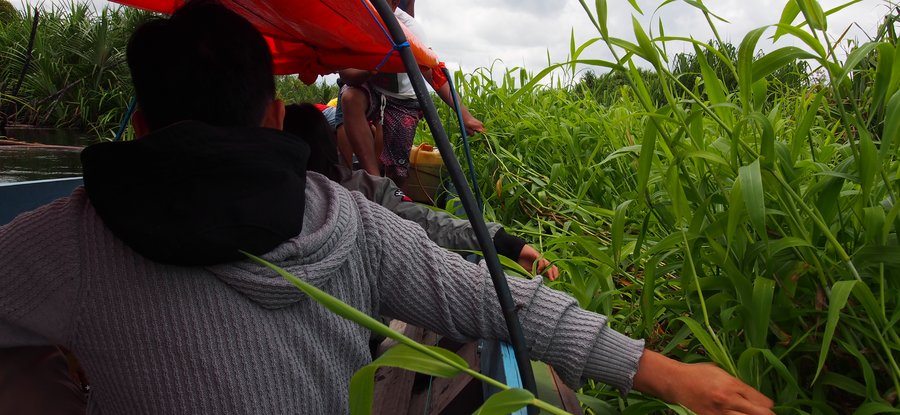
- Work alongside communities and at sites that are uniquely placed on the front lines of environmental and climate change
- Experience studying in an art school environment and be exposed to a diversity of methods for innovation
Earth systems are changing. Intensified climate events are becoming more common. A series of metabolic rifts are arising, impacting people and the planet. Our MA Environmental Architecture creates a new field of knowledge production and practice for the design of alternative forms of co-dependence between life forms and earth systems.
Studying with us, you’ll gain insight from leading figures in Environmental Architecture as you explore histories and theories of environmental change, multispecies and more-than-human design, environmental law and climate justice.
As part of the programme, you’ll engage with live projects at sites of complex environmental change. Work with experts from other disciplines, such as filmmakers, lawyers, anthropologists or biologists. Embark on multiple-day field trips where you can meet stakeholders and local communities while testing and exploring environmental research and design methods.
A rich culture of radical ideas
Research within our community is diverse. You might explore sustainable forms of design, concepts of stewardship, or land-use and settlement patterns. But the options don’t end there – we also look at areas such as the impacts of resource extraction on ecosystems, energy transition, indigenous and decolonial struggles.
Studying at a top art institution, you’ll benefit from our rich culture of interdisciplinary work. We’ll give you opportunities to forge connections through our mentorship scheme, uniting you with local and international expertise. By the end of the programme, you’ll be able to apply your knowledge to independent research and the practice of environmental architecture and design.
Explore further and register your interest
Catch the replays from our latest online Open Day.
Watch portfolio advice from the programme team.
Applications for the September 2026 intake are now closed. To stay updated on application dates and updates for 2027 entry, please complete the Register your Interest form.
Kensington transformation
We are embarking upon a series of refurbishment works at our Kensington campus.
These involve making essential repairs to some areas of our much-loved heritage buildings and improving our facilities for future generations of RCA students and staff.
Student and alumni stories



Gallery

Staff






Facilities
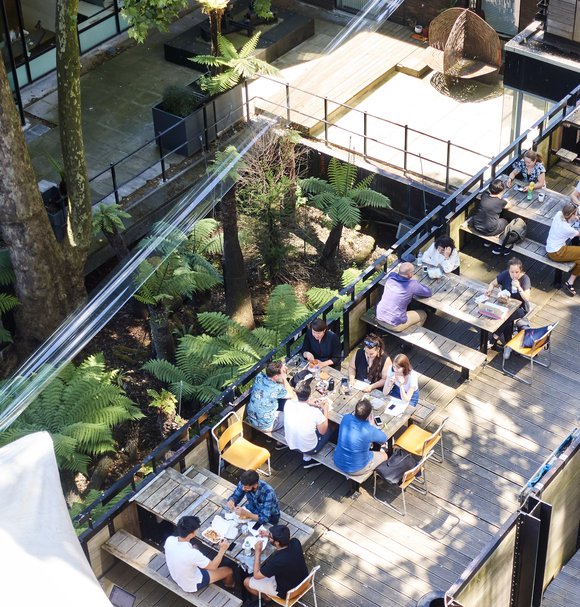
The School of Architecture is currently based at our historic Kensington site.
View all facilitiesOur studios are the heart of day-to-day activity for the School. Studios are purpose-designed for inspiration and interaction between students of different design disciplines. Studio workspace is provided for each student. In addition, you have access to wood, metal, plastic and resin workshop facilities, as well as contemporary digital fabrication equipment and a suite of bookable project and making spaces.


Our alumni
Our alumni form an international network of creative individuals who have shaped and continue to shape the world. Click on each name to find out more.
Where will the RCA take you?- Yussef Agbo-Ola
- Tima Rabbat
- Gabriele Grigorjeva
- Mingxin Li
- Antonio del Giudice
- Asfah Hamid
- Isabel Palacios Macedo
- Will Gibbs
- Kuan Xie
- Paul Broker
More details on what you'll study.
Find out what you'll cover in this programme.
What you'll cover
What will I learn?
The MA Environmental Architecture programme aims to expand the scope and content of design-led research in the field of architecture, environmental studies and territorial management. Possible areas of inquiry can include: sustainable forms of urbanisation; concepts of stewardship and care for nature; environmental change and its effect on migration and settlement patterns; climate justice adaptation to land use practices; impacts of resource extraction on ecosystems; environmental impacts of the energy transition; post-development and degrowth; indigenous struggles for land and environments, among many others.
Students on the MA Environmental Architecture programme will have the opportunity to pursue a degree within a leading art and design institution, and to access the rich culture of radical and experimental interdisciplinary work at the Royal College of Art. Moreover, the programme will help students to establish a network of colleagues and mentors by offering them the opportunity of connecting to leading figures in Environmental Architecture both in London and internationally through an innovative practice mentorship scheme.
Programme structure
Term 1
Research Studio I: Architectures of Extraction (15 credits)
This unit consists of an introduction to the programme’s field-focused investigation into resource extraction architectures and their role in the climate and environmental crisis. It familiarises you with particular modes of work, especially design-based research methodologies, and collaborative forms of knowledge production.
Seminar I: Critical Canon (15 credits)
In Seminar I: Critical Canon you are introduced to the complexity of the contemporary climatic breakdown beyond the problem of global warming, and at both global and local scales. You will master different theories of environmental change and will be asked to critically reflect on architecture’s role for devising mitigation strategies. Through this, you will develop a critical analysis of traditional methods, theories, and design responses to define a set of guidelines for environmental architecture practice. The unit is delivered through a mix of lectures and workshops. Core theories and debates will be introduced through lectures. These will be complemented by workshops where key environmental concepts will be explored and discussed.
Media Studies I (15 credits)
Situated in the School of Architecture and welcoming a student cohort from across multiple spatial design disciplines, Media Studies provides a rigorous and granular examination of historical and contemporary methodologies of media practice and research. Our collective goal is to increase critical engagement with media. We achieve this through lectures, tutorials, and workshops in which new approaches to media are conceptualised, refined, and implemented in innovative proposals and projects.
You'll also take AcrossRCA (15 credits), which supports you in working across disciplines to use creative and critical thinking and practice and collaborative approaches to respond to urgent contemporary themes.
Term 2
Research Studio II: Environmental Interventions (15 credits)
In Studio II you will develop a design intervention strategy for the site explored in term 1. Emphasis will be placed on the definition of outputs, in relation to key project aims and stakeholders.
Working in groups within your Research Studios, you will propose an intervention strategy for the case studied in term 1. The strategy should be articulated in the form of a design brief, including its aims and objectives, scales of intervention and key stakeholders. You are expected to work in relation to multiple scenarios rather than a single proposition, and to consider the project's different phases of implementation.
A core element in this unit is the understanding of potential externalities such as conflicts between stakeholders or changes in the environmental, political and economic conditions that structure the project. You will be asked to consider local populations, NGOs, advocacy groups, governmental bodies or others that might be currently operating in the context of your project. You will be asked to critically explore modes of representation and communication in relation to the different forums where the project might take place. A combination of one-to-one, small and large group tutorials will be conducted regularly between students and staff. Specialists and invited experts will also contribute depending on each unit’s research interests and sites.
Seminar II: Critical Compositions (15 credits)
Seminar II: Critical Compositions is delivered in a blended mode. The unit will deepen your understanding of contemporary environmental architecture, by focusing on compositional techniques for critically situating relative to political and social frameworks. Paradigmatic cases, concepts and tools will be introduced through lectures and seminars with guests, complemented by weekly student-led roundtables. Students will engage in a series of world-building exercises, exploring the possibilities of mapping and counter-mapping as both a reflective and propositional practice. Students will work critically and creatively with AI-based research and production tools, and will orally present and discuss work collectively on a regular basis. Midway through the term a writing workshop will help students to start developing their end-of-term written submission. The end of term submission consists of a work blog which will be accompanied by a critical reflection.
School-Wide Elective (15 credits)
You choose one elective from the options given below.
You'll also take the Core Skills unit (15 credits), which supports you in advancing your academic and professional skills to aid the development of your personal projects at the RCA and beyond in your professional practice and career.
Term 3
Independent Research Project (60 credits)
The purpose of the Independent Research Project (IRP) is to enable you to apply the intellectual, technical and professional skills that you have developed throughout the programme to a challenging self-set brief. The IRP can be developed either individually or in group, and it should be based on the proposition for intervention developed in Research Studio II, Environmental Interventions. This is an opportunity for you to reflect on the theme of the studio while pursuing your own research interests.
The IRP includes a public presentation of work and exhibition, alongside peers from your programme, and following the conclusion of taught elements of the unit. This activity will help you to present the key design intentions of your work orally and visually. Focus will be given to forms of representing and communicating complex environmental issues, with a particular focus on exploring environmental aesthetics. You can make use of a variety of media including film, animation, models, drawings or other as adequate.
IRP teaching consists of studio-based tutorials and seminar sessions focusing the written components. Additionally, you will require access to technical facilities and the library. The IRP can be submitted through project or by thesis, and across a multiplicity of media and formats, from drawings, to film, animation or model making.
This MA is delivered over 45 weeks.
Design studio

The weekly design studio is the core of the MA programme. Work in the studio is organised individually and in small student groups (2–4 students), and teaching is conducted during weekly group tutorials and pin-up presentations.
The design studios introduce the pedagogy of the programme, provide you with design skills and research methodologies to analyse case studies, while assisting you with the formulation of research and design proposals. The teaching model combines written and design components, as both are considered essential practices in the generation of a disciplinary ecology. Currently, the programme features three design studios, each exploring architecture’s potential contribution to communities and organisations engaged in territorial disputes and resource extraction:
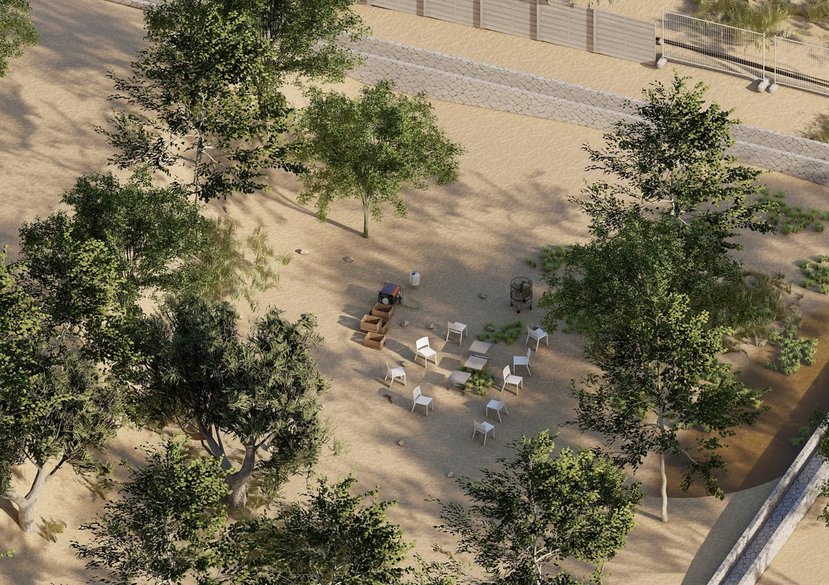
RS3: Alentejo Research Unit / Liquid Deserts Studio
Previous design studios:
Seminars

Environmental questions are rarely far from contemporary public debate.
Climate change, global warming, global forest fires, and extreme weather events, mass species extinction, the pollution of our air, seas, land and rivers, not to forget the pollution of our own bodies and food supplies are all daily headline news in print and televisual media.
How should we think about these questions within a school of architecture?
Seminars require constant engagement and involvement by students in course material selection and preparation, collective discussions and oral presentations.
Past guests include: Susan Schuppli, Pedro Neves Marques, Adrian Lahoud, Lindsay Bremner, Nabil Ahmed, Nikos Katsikis, Shela Sheik, RIVAL, Zannah Mae Matson, Andreas Philippopoulos-Mihalopoulos, Phineas Harper, Imani Jacqueline Brown and Professor Aran Chadwick.
Media studies
This unit enables students to explore how architects communicate ideas from both a contemporary and historical perspective. This encompasses a range of media that spans disciplines, ideologies and methods.
Students will use both analogue and digital technologies to understand better how a designer creates, interrogates and manipulates spatial environments.
This investigation will take place in a critical context, which explores how images are used to manufacture socio-political ideologies and negotiate public identities.
Practice mentors

A practice mentorship programme connects students to a network of practitioners through regular meetings taking place in Term 2 and 3, who will introduce you to different types of practice and career issues. You will have the opportunity to meet with different practices representing a variety of possible professional pathways that you might be interested in after completing your studies. In doing so we hope professional practices and organisations might have a foundational role in your development.
Recent practice mentors include:
Atmos Lab
Marc DuBois
Claudia Montero - Fundación Desierto de Atacama
Pippa Howard – Fauna & Flora International
Dr. Maria Guevara, MD – Médecins Sans Frontières
Nashin Mahtani
Future Firm
Konstantina Koulouri – Dark Matter Labs
Dane Carlson – REALMS
Events

Curation, installation, and exhibition are important methods of communication that opens new dialogues about environmental conflicts; while helping creative the threads of research and design travel and form new collaborations. Throughout the programme students have opportunities to show their work within and outside of the RCA.
Requirements
What you need to know before you apply
Candidates are selected entirely on merit and applications are welcomed from all over the world. The selection process will consider creativity, imagination and innovation as demonstrated in your portfolio, as well as your potential to benefit from the programme and to achieve high MA standards overall.
This programme accepts students from a wide range of backgrounds, including career changers. Many of those who join the programme will be students of architecture with a 3+2-year Bachelor and Master’s degree, or master-equivalent 5-year diploma preferably in Architecture, Landscape Architecture, Landscape Urbanism, Urban Design or other related design discipline looking to acquire expertise in large scale, environmental and ecological design projects.
However the programme also attracts many people from other backgrounds, such as fine arts, social sciences, geography, urban studies, planning or economics, as well as those who do not already have a Master's degree. If your prior work is of exceptional merit and you’re able to demonstrate your ability to work alongside and contribute to multidisciplinary teams, please do apply. Evidence of your intellectual and professional curiosity and a readiness to engage in a rigorous and demanding period of study is essential.
What's needed from you
Portfolio requirements
Environmental Architecture is a speculative and interdisciplinary programme aimed at exploring the contribution of architecture to our current environmental and climate crises. We welcome architects and designers from all diverse fields of expertise, career changers and people with unique experiences and backgrounds.
If you're not a designer, don’t worry – show us how you’ve addressed environmental and ecological issues in your field, communicate it visually or in writing, evidencing your unique creativity in whatever form this may take.
When uploading your portfolio, we would like you to prioritise pieces of work that showcase:
- ability and commitment in addressing environmental and climate issues
- technical design or visualisation skills (these might take the form of drawing, model making, 3D modelling, animation, film, photography, exhibition design or others)
- research skills (this could include academic papers, fieldwork and documentary practices, science-based environmental analysis or other).
Personal statement
Please provide a 300-word written personal statement that addresses the following points:
- Introduce yourself, your interests and your motivations for applying to the Royal College of Art, and to this programme in particular.
- Briefly summarise any educational background and professional experience to date that will support your application.
- Tell us what you want to do in the future.
Your journey: video requirements
While portfolios showcase important technical and design skills, there are certain aspects of an application that are better grasped by hearing you speak about your own work. As part of your application, you must submit a video of no more than two minutes as part of the application process.
Please take this opportunity to tell us a bit more about your motivations and personal interests, and how these have led you to apply to this programme.
Start by telling us what led to your interest in the Environmental Architecture MA. Could you reflect on some of the difference ways by which architecture could have a positive contribution to addressing climate change?
Finally, where do you see yourself in the future, and what you expect to gain from studying at the Royal College of Art and in the MA Environmental Architecture.
English-language requirements
If you are not a national of a majority English-speaking country you will need the equivalent of an IELTS Academic or UKVI score of 6.5 overall (with a minimum of 5.5 in every component). Students achieving a grade of at least 6.0, with a grade of 5.5 in the Test of Written English, may be eligible to take the College’s English for Academic Purposes course to enable them to reach the required standard.
You are exempt from this requirement if you have received a 2.1 degree or above from a university in a majority English-speaking nation within the last five years.
If you need a Student Visa to study at the RCA, you will also need to meet the Home Office’s minimum requirements for entry clearance.
Student Visas
If you require a Student Visa (part-time route) for the MA Environmental Architecture programme, you will have work restrictions and will not be allowed to work in the UK during your studies. If you are currently employed on a Tier 2 visa you can apply for the part-time MA Environmental Architecture programme as long as you can continue to work for the same employer who is sponsoring you, otherwise you would need to switch to a Student Visa (part-time route) and would no longer be allowed to work in the UK.
For more information please see Student Visa or contact our Student support team.
Fees & funding
For this programme
Fees for new students
Fees for September 2026 entry on this programme are outlined below. From 2021 onward, EU students are classified as Overseas for tuition fee purposes.
Home (Full-time)
Overseas and EU (Full-time)
Deposit
New entrants to the College will be required to pay a non-refundable deposit in order to secure their place. This will be offset against the tuition fees. Deposits for 2026 entry will be confirmed in September 2025; 2025 deposit rates below for reference.
Home
Overseas and EU
Progression discount
For alumni who have completed an RCA Graduate Diploma and progress onto an RCA MA programme, a progression discount of £1,000 is available. For alumni progressing from an RCA Master's to another RCA Master's, a progression discount of £2,000 is available (£1,000 per year for part-time programmes).
* Total cost is based on the assumption that the programme is completed in the timeframe stated in the programme details. Additional study time may incur additional charges.
Scholarships
Scholarships
Each year, the RCA scholarship programme supports hundreds of students. The following scholarships are confirmed for this programme, with additional awards added throughout the year.
GREAT Scholarship
In partnership with the British Council and the GREAT Britain Campaign, the RCA has announced the third year of GREAT Scholarships. For 2026/27 we are offering two scholarships to students from India and Turkey.
Eligible programmes: Interior Design MA, City Design MA, Environmental Architecture MA, Ceramics & Glass MA, Contemporary Art Practice MA, Curating Contemporary Art MA, V&A/RCA History of Design MA, Jewellery & Metal MA, Painting MA, Photography MA, Print MA, Sculpture MA, Writing MA, Animation MA, Digital Direction MA, Information Experience Design MA, Visual Communication MA, Design Products MA, Fashion MA, Intelligent Mobility Design MA, Service Design MA, Textiles MA, Creative Education MEd, Communication MFA, Master of Research RCA MRes, Design Futures MDes, Arts & Humanities MFA, Design Practice MArch
Other criteria: None
Eligible fee status: Overseas fee status
Value: £10,000 toward fees
House of Fraser Bursary
Eligible programmes: Architecture MA Architecture (ARB/RIBA Part 2), Interior Design MA, City Design MA, Environmental Architecture MA, Ceramics & Glass MA, Contemporary Art Practice MA, Curating Contemporary Art MA, V&A/RCA History of Design MA, Jewellery & Metal MA, Painting MA, Photography MA, Print MA, Sculpture MA, Writing MA, Animation MA, Digital Direction MA, Information Experience Design MA, Visual Communication MA, Design Products MA, Fashion MA, Innovation Design Engineering MA/MSc, Intelligent Mobility Design MA, Service Design MA, Textiles MA
Other criteria: None
Eligible fee status: Home fee status
Value: £10,000 toward fees
Leathersellers' Bursary
For students using leather in their practice
Eligible programmes: Architecture MA Architecture (ARB/RIBA Part 2), Interior Design MA, City Design MA, Environmental Architecture MA, Ceramics & Glass MA, Contemporary Art Practice MA, Curating Contemporary Art MA, V&A/RCA History of Design MA, Jewellery & Metal MA, Painting MA, Photography MA, Print MA, Sculpture MA, Writing MA, Animation MA, Digital Direction MA, Information Experience Design MA, Visual Communication MA, Design Products MA, Fashion MA, Innovation Design Engineering MA/MSc, Intelligent Mobility Design MA, Service Design MA, Textiles MA
Other criteria: None
Eligible fee status: Home or overseas status
Value: £6,000 towards living costs
RCA President & Vice-Chancellor’s International
Round 1 and 2 programme applications will be automatically assessed for one of these scholarships. If you are successful, you will be told about this at the same time as receiving your RCA programme offer.
Eligible programmes: Architecture MA Architecture (ARB/RIBA Part 2), Interior Design MA, City Design MA, Environmental Architecture MA, Ceramics & Glass MA, Contemporary Art Practice MA, Curating Contemporary Art MA, V&A/RCA History of Design MA, Jewellery & Metal MA, Painting MA, Photography MA, Print MA, Sculpture MA, Writing MA, Animation MA, Digital Direction MA, Information Experience Design MA, Visual Communication MA, Design Products MA, Fashion MA, Innovation Design Engineering MA/MSc, Intelligent Mobility Design MA, Service Design MA, Textiles MA, Creative Education MEd, Communication MFA, Master of Research RCA MRes, Design Futures MDes, Arts & Humanities MFA, Design Practice MArch
Other criteria: Applicants from Australia, Brazil, Canada, Chile, Colombia, Denmark, Egypt, France, Germany, Greece, Hong Kong, India, Indonesia, Israel, Italy, Japan, Malaysia, Mexico, Netherlands, Nigeria, Pakistan, Palestine, Poland, Portugal, Saudi Arabia, Singapore, South Korea, Spain, Switzerland, Taiwan, Thailand, Turkey, UAE, USA
Eligible fee status: Overseas fee status
Value: £9,000 toward fees
RCA President & Vice-Chancellor’s UK Scholarship
Round 1 and 2 programme applications will be automatically assessed for one of these scholarships. If you are successful, you will be told about this at the same time as receiving your RCA programme offer.
Eligible programmes: Architecture MA Architecture (ARB/RIBA Part 2), Interior Design MA, City Design MA, Environmental Architecture MA, Ceramics & Glass MA, Contemporary Art Practice MA, Curating Contemporary Art MA, V&A/RCA History of Design MA, Jewellery & Metal MA, Painting MA, Photography MA, Print MA, Sculpture MA, Writing MA, Animation MA, Digital Direction MA, Information Experience Design MA, Visual Communication MA, Design Products MA, Fashion MA, Innovation Design Engineering MA/MSc, Intelligent Mobility Design MA, Service Design MA, Textiles MA, Creative Education MEd, Communication MFA, Master of Research RCA MRes, Design Futures MDes, Arts & Humanities MFA, Design Practice MArch
Other criteria: None
Eligible fee status: Home fee status
Value: £5,000 toward fees
The Mohammed bin Rashid Scholarship
The Mohammed bin Rashid Scholarship for Architecture & Design supports exceptional Arab talent in the fields of architecture, urban design, and environmental innovation for the academic year 2026/27. See full application details at www.rca.ac.uk/mbr-apply
Eligible programmes: Interior Design MA, City Design MA, Environmental Architecture MA, Design Practice MArch
Other criteria: 3 places are reserved for employees of Dubai Municipality who apply to the RCA and meet its academic standards, 9 remaining places are open to citizens of the United Arab Emirates, Saudi Arabia, Algeria, Bahrain, Comoros, Djibouti, Egypt, Iraq, Jordan, Kuwait, Lebanon, Libya, Mauritania, Morocco, Oman, Palestine, Qatar, Somalia, Sudan, Syria, Tunisia, and Yemen.
Eligible fee status: Overseas fee status
Value: Fully funded (including fees & maintenance)
The RCA Sanctuary Scholarship
For full details please see here: www.rca.ac.uk/study/apply-to-study/funding-your-studies/rca-scholarships-and-awards/the-rca-sanctuary-scholarship/
Eligible programmes: Interior Design MA, City Design MA, Environmental Architecture MA, Ceramics & Glass MA, Contemporary Art Practice MA, Curating Contemporary Art MA, V&A/RCA History of Design MA, Jewellery & Metal MA, Painting MA, Photography MA, Print MA, Sculpture MA, Writing MA, Animation MA, Digital Direction MA, Information Experience Design MA, Visual Communication MA, Design Products MA, Fashion MA, Intelligent Mobility Design MA, Service Design MA, Textiles MA, Creative Education MEd, Communication MFA, Master of Research RCA MRes, Design Futures MDes, Arts & Humanities MFA, Design Practice MArch
Other criteria: None
Eligible fee status: Home or overseas status
Value: Full fees & support package up to the value of £20,000 pa (depending on the awardee’s circumstances)
The RCA UK Cost of Living Scholarship
Eligible programmes: Architecture MA Architecture (ARB/RIBA Part 2), Interior Design MA, City Design MA, Environmental Architecture MA, Ceramics & Glass MA, Contemporary Art Practice MA, Curating Contemporary Art MA, V&A/RCA History of Design MA, Jewellery & Metal MA, Painting MA, Photography MA, Print MA, Sculpture MA, Writing MA, Animation MA, Digital Direction MA, Information Experience Design MA, Visual Communication MA, Design Products MA, Fashion MA, Innovation Design Engineering MA/MSc, Intelligent Mobility Design MA, Service Design MA, Textiles MA, Creative Education MEd, Communication MFA, Master of Research RCA MRes, Design Futures MDes, Arts & Humanities MFA, Design Practice MArch
Other criteria: None
Eligible fee status: Home fee status
Value: £5,000 towards living costs
The RCA UK Disabled Students’ Scholarship
For students who identify as D/deaf or disabled
Eligible programmes: Architecture MA Architecture (ARB/RIBA Part 2), Interior Design MA, City Design MA, Environmental Architecture MA, Ceramics & Glass MA, Contemporary Art Practice MA, Curating Contemporary Art MA, V&A/RCA History of Design MA, Jewellery & Metal MA, Painting MA, Photography MA, Print MA, Sculpture MA, Writing MA, Animation MA, Digital Direction MA, Information Experience Design MA, Visual Communication MA, Design Products MA, Fashion MA, Innovation Design Engineering MA/MSc, Intelligent Mobility Design MA, Service Design MA, Textiles MA, Creative Education MEd, Communication MFA, Master of Research RCA MRes, Design Futures MDes, Arts & Humanities MFA, Design Practice MArch
Other criteria: None
Eligible fee status: Home fee status
Value: £6,000 towards living costs
The Rothschild Foundation Scholarship
Eligible programmes: Environmental Architecture MA, Sculpture MA, Writing MA
Other criteria: None
Eligible fee status: Home fee status
Value: Full fees and maintenance
The Sir Frank Bowling Scholarship
For students identifying as Black or Black British - Caribbean, Black or Black British - African, Other Black background, Mixed - White and Black Caribbean, Mixed - White and Black African
Eligible programmes: Architecture MA Architecture (ARB/RIBA Part 2), Interior Design MA, City Design MA, Environmental Architecture MA, Ceramics & Glass MA, Contemporary Art Practice MA, Curating Contemporary Art MA, V&A/RCA History of Design MA, Jewellery & Metal MA, Painting MA, Photography MA, Print MA, Sculpture MA, Writing MA, Animation MA, Digital Direction MA, Information Experience Design MA, Visual Communication MA, Design Products MA, Fashion MA, Innovation Design Engineering MA/MSc, Intelligent Mobility Design MA, Service Design MA, Textiles MA, Creative Education MEd, Communication MFA, Master of Research RCA MRes, Design Futures MDes, Arts & Humanities MFA, Design Practice MArch
Other criteria: None
Eligible fee status: Home fee status
Value: Full fees and maintenance
Even if you do not currently see a scholarship for which you meet the eligibility criteria, we encourage you to apply to be considered for financial support.
Unless otherwise stated, you must apply in either round 1 or 2, and have received an offer of study on an RCA programme to be invited to make a scholarship application. Therefore, we strongly recommend you apply for your programme as early as possible but no later than the round 2 deadline.
More information
Additional fees
In addition to your programme fees, please be aware that you may incur other additional costs associated with your study during your time at RCA. Additional costs can include purchases and services (without limitation): costs related to the purchase of books, paints, textiles, wood, metal, plastics and/or other materials in connection with your programme, services related to the use of printing and photocopying, lasercutting, 3D printing and CNC. Costs related to attending compulsory field trips, joining student and sport societies, and your Convocation (graduation) ceremony.
If you wish to find out more about what type of additional costs you may incur while studying on your programme, please contact the Head of your Programme to discuss or ask at an online or in person Open Day.
We provide the RCASHOP online, and at our Kensington and Battersea Campuses – this is open to students and staff of the Royal College of Art only to provide paid for materials to support your studies.
We also provide support to our students who require financial assistance whilst studying, including a dedicated Materials Fund.
External funding
There are many funding sources, with some students securing scholarships and others saving money from working. It is impossible to list all the potential funding sources; however, the following information could be useful.
Payments
Tuition fees are due on the first day of the academic year and students are sent an invoice prior to beginning their studies. Payments can be made in advance, on registration or in two instalments.
Experience
The social media content shown here reflects past and current student activity and is provided for illustrative purposes only. Experiences on the programme may vary and are subject to change for future students.
Ask a question
Get in touch if you’d like to find out more or have any questions.
More opportunities to study at the RCA
Related programmes